
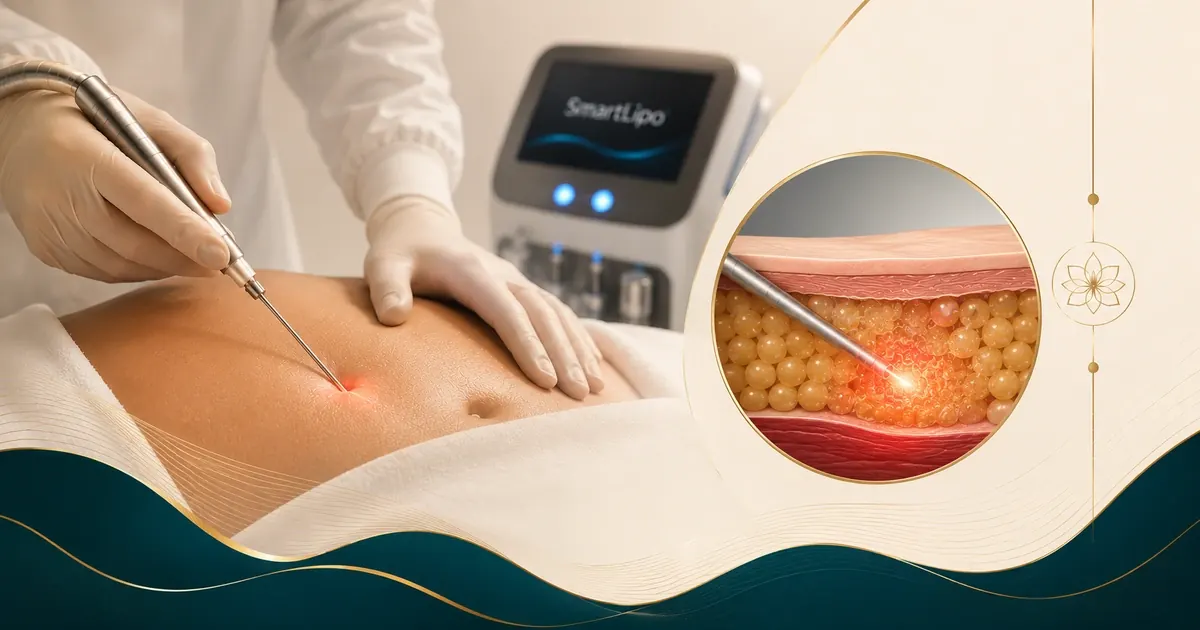
What Is SmartLipo?
SmartLipo is a brand-name laser-assisted lipolysis (LAL) system manufactured by Cynosure (now part of Hologic). It was the first FDA-cleared laser liposuction device (2006) and remains the most widely recognised laser lipo brand name. The system uses a thin fibre optic cannula to deliver Nd:YAG laser energy (1064 nm primary wavelength) directly into the fat layer, thermally disrupting fat cells before they are aspirated.
SmartLipo is not a non-invasive treatment. It is surgical liposuction — the same small incisions are made, fat is physically removed from the body, and recovery is comparable to standard liposuction. The laser adds a pre-treatment step; it does not replace the surgery.
Several generations of the device exist:
- SmartLipo (original): Single 1064 nm Nd:YAG wavelength
- SmartLipo MPX: Dual 1064 nm + 1320 nm wavelengths (multiplexed)
- SmartLipo Triplex: Three wavelengths: 1064, 1320, and 1440 nm
Other laser liposuction brands — SlimLipo (924/975 nm), LipoLite (1064 nm), CoolLipo (1320 nm) — use the same laser-liquefaction principle with slightly different wavelengths or delivery parameters. For a broader overview of laser lipo technology beyond the SmartLipo brand, see our laser liposuction guide, or explore all liposuction techniques to see how SmartLipo fits into the wider landscape.
SmartLipo vs "Laser Lipo"
"SmartLipo" and "laser lipo" are often used interchangeably by patients, but technically SmartLipo is one brand of laser liposuction. The term "laser lipo" also gets confused with non-surgical "cold laser" body contouring devices (Zerona, Strawberry Laser) that do not remove fat — only SmartLipo and similar LAL devices are actual surgical procedures that permanently remove fat cells.
How SmartLipo Works
The SmartLipo procedure combines tumescent infiltration with laser energy delivery, followed by aspiration of liquefied fat.
The Laser Mechanism
Histological evaluation of the pulsed Nd:YAG laser shows that the 1064 nm wavelength causes direct rupture of adipocyte membranes through photothermal interaction — the laser energy heats intracellular water, causing explosive vaporisation that disrupts the fat cell.1 Simultaneously, the laser energy reaches the undersurface of the dermis, causing controlled thermal damage to collagen fibres that triggers a wound-healing response — resulting in new collagen formation (neocollagenesis) over the following 3–6 months.
Thermal Profile and Skin Tightening
Research into the thermal effects of 1064/1320 nm laser energy during SmartLipo demonstrated that tissue temperatures reach 48–50°C at the subdermal level — sufficient to denature collagen and stimulate neocollagenesis without causing full-thickness skin burns when the probe is moved continuously.2 The 1320 nm wavelength has higher water absorption and is believed to provide stronger dermal heating for skin tightening, which is why newer SmartLipo models combine both wavelengths.
SmartLipo Procedure Steps
- Tumescent solution infiltrated (as with all modern liposuction)
- SmartLipo fibre optic cannula inserted through 1–2 mm incision
- Laser activated — surgeon moves probe through fat in a fan pattern
- Temperature monitored externally (skin surface should not exceed 40°C)
- Fat aspirated through standard small cannula once liquefied
- Incisions left open or loosely closed; compression garment applied
| Wavelength | Laser Type | Primary Target | Clinical Effect |
|---|---|---|---|
| 1064 nm | Nd:YAG | Adipocyte membranes | Fat liquefaction; coagulation of small vessels |
| 1320 nm | Nd:YAG | Water (dermal collagen) | Skin tightening via neocollagenesis |
| 1440 nm | Nd:YAG | Water + fat | Enhanced fat disruption; tissue coagulation |
Clinical Evidence & Results
The key clinical question for SmartLipo is not whether it works (it clearly removes fat — it is liposuction with a laser step), but whether it produces better results than standard tumescent liposuction alone, particularly regarding skin tightening.
Randomised Trial Evidence
A randomised clinical trial comparing 980 nm diode laser-assisted lipolysis to traditional liposuction for submental (chin/neck) fat found that both techniques produced effective fat reduction with no statistically significant difference in patient satisfaction, physician assessment, or complication rates.3 While this study used a 980 nm diode (not specifically SmartLipo's 1064 nm), the laser mechanism and clinical question are essentially identical.
Systematic Review Evidence
A 2025 comprehensive review of laser-assisted lipolysis concluded that LAL devices (including SmartLipo) are safe and effective alternatives to traditional liposuction, with potential advantages in smaller treatment areas — but acknowledged that definitive superiority over standard techniques has not been established in rigorous head-to-head trials.4
What the Evidence Supports vs What Is Marketing
| Claim | Evidence Level | Assessment |
|---|---|---|
| Removes fat effectively | Strong (RCTs + large series) | Yes — as effective as traditional liposuction |
| Causes collagen remodelling | Strong (histological studies) | Yes — new collagen formation confirmed |
| Tightens skin | Moderate (variable, patient-dependent) | Real but modest; best with mild laxity + good baseline elasticity |
| Less bruising than standard lipo | Moderate (coagulation mechanism) | Plausible — laser coagulates small vessels; less validated than VASER |
| Superior to traditional lipo overall | Weak (no RCT shows superiority) | Not proven — comparable results in head-to-head studies |
| Non-invasive / no downtime | False | Misleading marketing — it is surgical with standard lipo recovery |
SmartLipo vs VASER vs Traditional
Understanding where SmartLipo fits relative to other liposuction technologies helps patients make informed decisions. Each technology has situations where it excels.
| Feature | SmartLipo (Laser) | VASER (Ultrasound) | Traditional SAL |
|---|---|---|---|
| Energy source | Nd:YAG laser (heat) | Ultrasound (vibration) | Mechanical (cannula movement) |
| Fat disruption | Thermal liquefaction | Cavitation emulsification | Physical dislodgement |
| Tissue selectivity | Moderate (thermal damage non-specific) | High (resonance targets fat specifically) | Low (mechanical force is non-selective) |
| Best volume range | Small to medium (<3 L) | Medium to large (1–5+ L) | Any volume |
| HD sculpting capability | Limited | Excellent (gold standard) | Possible but difficult |
| Skin tightening claim | Strongest marketing; modest evidence | Some thermal effect | Via retraction only |
| Fibrous area performance | Moderate | Excellent | Difficult; more surgeon fatigue |
| Cost premium vs standard | +10–30% | +15–35% | Baseline |
| Recovery difference | Similar to standard | Slightly faster (less bruising) | Standard baseline |
When SmartLipo Is the Best Choice
- Chin and neck: Small area where skin tightening is highly valued; laser coagulation reduces bleeding in a visible area
- Arms: Moderate fat with mild laxity; skin tightening benefit most visible here
- Inner thighs: Delicate area where targeted energy delivery helps
- Patients prioritising skin tightening over maximum fat removal in small zones
When VASER Is Preferred
- Larger fat volumes (abdomen, flanks, back)
- High-definition body sculpting (abdominal etching, pectoral definition)
- Fibrous tissue areas (male chest, upper back)
- Fat transfer harvesting (better cell viability)
Candidates & Treatment Areas
SmartLipo candidates are essentially the same as for any liposuction — adults near their ideal weight with localised, diet-resistant fat. The specific advantages of SmartLipo make it most appropriate for:
- Patients with small-to-medium fat deposits (not large-volume debulking)
- Areas where skin tightening is a secondary goal
- Patients who want to be awake (SmartLipo is commonly performed under local + sedation)
- Younger patients with good-to-moderate skin elasticity (the thermal effect works best with some baseline collagen quality)
Ideal Treatment Areas for SmartLipo
- Chin and neck — most popular SmartLipo area; visible skin-tightening benefit
- Arms — moderate fat with mild laxity
- Inner thighs — delicate area; precision matters
- Abdomen (smaller deposits) — effective but VASER may be better for larger volumes
- Male chest — can treat pseudo-gynecomastia; laser useful for fibrous tissue
- Knees — small, targeted fat pad removal
Who Should Consider Alternatives
- Large fat volumes: Standard tumescent or VASER more appropriate for 3+ litres
- HD sculpting goals: VASER is the established gold standard
- Significant skin laxity: No laser tightens significantly loose skin — surgical excision needed
- Budget-constrained: Standard tumescent achieves comparable fat removal at lower cost
Recovery Timeline
SmartLipo recovery is broadly equivalent to standard liposuction for the same area. Claims of "faster recovery" compared to traditional lipo are largely marketing rather than evidence-based — the incisions, fat removal, and tissue trauma are similar.
| Timeframe | What to Expect | Activity Level |
|---|---|---|
| Days 1–3 | Swelling, mild soreness, drainage from incisions; numbness from tumescent | Rest; short walks; compression garment 24/7 |
| Days 4–7 | Swelling peaks; bruising (may be less than standard lipo); mild tenderness | Desk work possible; light daily activities |
| Weeks 2–3 | Bruising fading; shape emerging; stiffness normal | Most normal activities; light cardio |
| Weeks 4–6 | Major swelling resolved; skin tightening beginning | Return to exercise; compression weaning |
| Months 3–6 | Skin tightening continues (neocollagenesis); final result | Full activity; maintain stable weight |
The skin-tightening component of SmartLipo results develops gradually over 3–6 months as collagen remodelling progresses — patients should not judge the final result until at least 3 months post-operatively. For a comprehensive recovery guide, see our liposuction recovery timeline.
Cost Analysis
SmartLipo costs reflect the price of the proprietary laser hardware (Cynosure systems cost clinics $75,000–$120,000) plus the additional operative time for the laser phase. The cost premium over standard tumescent liposuction is typically 10–30%.
SmartLipo Cost by Area
| Treatment Area | US (Total) | UK (Total) | Turkey (All-Inclusive) |
|---|---|---|---|
| Chin / neck | $3,500–$6,000 | £2,500–£5,000 | $2,000–$3,500 |
| Arms (both) | $4,000–$7,000 | £3,500–£6,000 | $2,500–$4,000 |
| Abdomen | $4,500–$8,000 | £4,000–£7,000 | $2,500–$4,500 |
| Flanks (love handles) | $3,500–$6,500 | £3,000–£5,500 | $2,000–$3,500 |
| Inner thighs | $4,000–$7,000 | £3,500–£6,000 | $2,500–$4,000 |
| Multiple areas (3+) | $10,000–$18,000 | £8,000–£15,000 | $4,000–$7,000 |
Is SmartLipo Worth the Premium?
The "is it worth it" question depends on specific circumstances:
- Worth the premium: Chin/neck (visible area, skin tightening valuable), arms (mild laxity + fat), inner thighs (precision area)
- Probably not worth the premium: Large abdominal debulking (standard or VASER better), back (VASER handles fibrous tissue better), any area where skin is already taut
- Never worth it: If marketed as "non-invasive" or "no downtime" — those claims are false for any LAL device
For comprehensive pricing information across all techniques and countries, see our liposuction cost guide.
Frequently Asked Questions
-
SmartLipo is a brand-name laser liposuction system by Cynosure that uses a 1064 nm Nd:YAG laser fibre to liquefy fat before aspiration. It was the first FDA-cleared laser lipo device (2006). It is surgical liposuction with a laser pre-treatment step — not a non-invasive body contouring treatment. Other laser lipo brands (SlimLipo, LipoLite) work on the same principle with different wavelengths.
-
Not definitively. A randomised trial showed comparable fat reduction between laser liposuction and traditional liposuction with no significant difference in patient satisfaction.3 SmartLipo's advantage — collagen stimulation for skin tightening — is real but modest. For standard fat removal, traditional tumescent produces equivalent results at 10–30% lower cost. SmartLipo may have an edge in small areas where skin tightening is a primary goal.
-
SmartLipo uses laser heat; VASER uses ultrasound vibration. VASER is preferred for larger volumes, fibrous areas (male chest, back), and HD sculpting — its tissue-selective mechanism is better suited to precision work. SmartLipo may be preferred for smaller areas where thermal skin tightening is the secondary goal. VASER has more published evidence for high-definition body contouring. Surgeon expertise matters more than the device.
-
SmartLipo costs 10–30% more than standard tumescent liposuction. US total costs: $3,500–$8,000 per area. Chin/neck: $3,500–$6,000. Arms: $4,000–$7,000. Abdomen: $4,500–$8,000. Turkey all-inclusive packages: $2,000–$4,500 per area. The premium reflects proprietary laser equipment costs passed on to patients.
-
Yes, to a modest degree. Histological studies confirm that SmartLipo's laser energy stimulates new collagen formation in the dermis.1 This produces measurable skin firmness improvement over 3–6 months. However, the effect is limited — best suited to patients with mild-to-moderate laxity and good baseline skin quality. It cannot replace surgical skin excision (tummy tuck, arm lift) for significantly loose skin.
-
It depends on your goals and treatment area. SmartLipo is most worth the premium for small areas where skin tightening matters — chin/neck, arms, inner thighs. For larger areas (abdomen, flanks) where the goal is primarily fat removal, standard tumescent lipo produces comparable results at lower cost. If HD sculpting or large-volume contouring is the goal, VASER is the better investment. Always choose a board-certified surgeon with high case volumes over a specific brand.