
What Is VASER Liposuction?
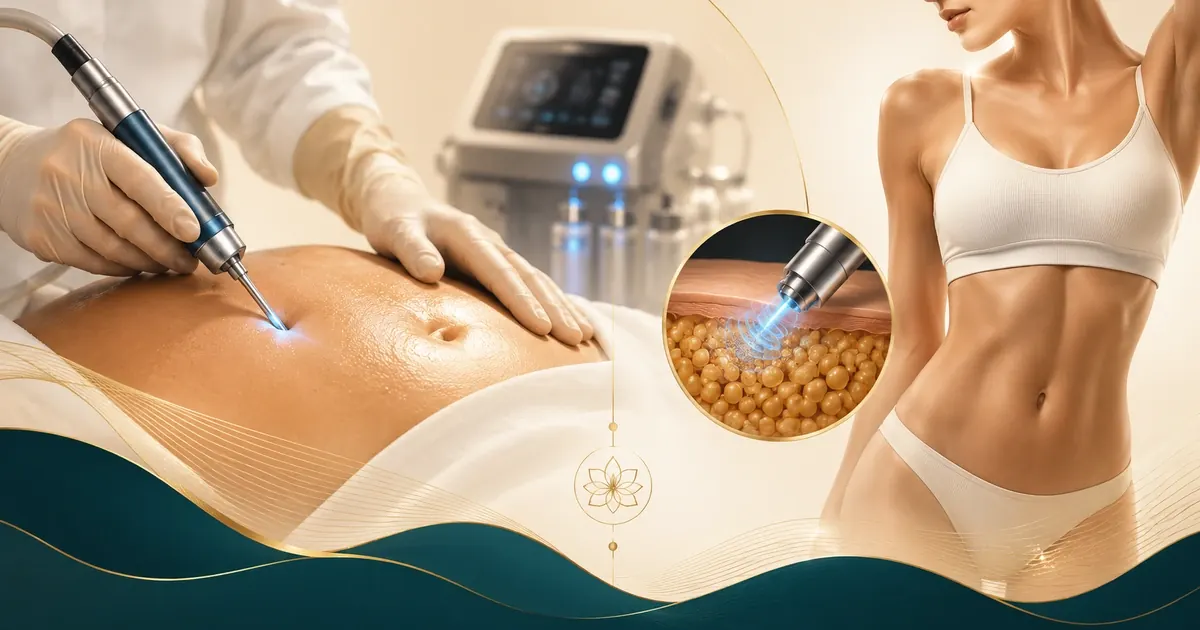
VASER liposuction — Vibration Amplification of Sound Energy at Resonance — is a third-generation ultrasound-assisted lipoplasty (UAL) system that uses high-frequency sound waves to selectively emulsify adipose tissue before aspiration. Unlike first-generation external ultrasound devices, the VASER probe is inserted through small incisions and delivers energy directly to the fat layer.
The technology was developed to address limitations of earlier ultrasound liposuction devices (which were associated with thermal injuries and seromas) while preserving the key advantage: selective fat disruption that spares blood vessels, nerves, and connective tissue. A foundational study on ultrasound-assisted body contouring established that UAL's tissue-selective mechanism could reduce blood loss and improve contour precision compared to traditional suction-assisted lipoplasty (SAL).4
VASER is now the most widely used UAL system globally and is the preferred technology for high-definition liposuction — where surgeons sculpt superficial fat layers to reveal underlying muscular anatomy. It is also extensively used for standard body contouring in areas where traditional lipo may cause more trauma, particularly fibrous zones like the male chest, upper back, and flanks. For a side-by-side look at how VASER compares to every other option, visit our complete liposuction techniques overview.
VASER vs Earlier Ultrasound Devices
First-generation UAL devices (1990s) delivered ultrasound energy through solid titanium probes that generated significant heat. While effective at breaking apart fat, they were associated with skin burns, seromas, and prolonged numbness. VASER's grooved titanium probe and pulsed delivery mode allow the same fat-emulsification effect at lower energy levels — reducing thermal complications while maintaining the tissue-selective advantage.
How VASER Differs From Laser and Traditional Lipo
VASER, laser liposuction, and traditional tumescent liposuction all remove subcutaneous fat through small incisions. The key distinction is the energy source used to break apart fat before suctioning:
- Traditional (SAL): Mechanical cannula movement physically dislodges fat
- Laser (LAL): Thermal energy from a laser fibre liquefies fat
- VASER (UAL): Ultrasound vibration emulsifies fat selectively
How Ultrasound-Assisted Liposuction Works
The VASER procedure follows a systematic three-phase approach that distinguishes it from traditional single-step liposuction.
Phase 1: Tumescent Infiltration
A tumescent solution (saline with dilute lidocaine and epinephrine) is infiltrated into the target fat layer. This serves multiple purposes: it provides local anaesthesia, constricts blood vessels to minimise bleeding, and expands the fat layer — making it easier for ultrasound energy to propagate through the tissue and creating a buffer between the VASER probe and the skin.
Phase 2: Ultrasound Emulsification
The VASER probe — a thin, grooved titanium rod — is inserted through 2–3 mm incisions. When activated, it vibrates at 36,000 cycles per second (36 kHz), generating mechanical energy that disrupts the bonds between fat cells. The grooved design focuses energy in a radial pattern, creating small vapour bubbles in the tumescent fluid (cavitation) that implode against fat cell membranes, rupturing them and releasing liquid fat content.
This process is tissue-selective: the mechanical resonance frequency specifically targets adipose tissue, while denser structures — blood vessels, nerves, and collagen fibres — are largely preserved. This is the mechanism behind VASER's reduced bruising and post-operative pain.
Phase 3: Gentle Aspiration
After emulsification, the liquefied fat is removed through specialised VentX cannulas designed for low-pressure aspiration. Because the fat is already emulsified, less force and smaller cannula movements are needed — reducing tissue trauma compared to aggressive mechanical aspiration in traditional liposuction.
| Phase | Action | Duration | Purpose |
|---|---|---|---|
| 1 — Infiltration | Tumescent solution injected | 10–20 min per area | Anaesthesia, vasoconstriction, tissue expansion |
| 2 — Emulsification | VASER probe activated | 5–15 min per area | Selective fat disruption via ultrasound |
| 3 — Aspiration | VentX cannula suction | 20–45 min per area | Removal of emulsified fat |
| Post-op | Compression garment applied | Immediate | Reduce swelling, support skin retraction |
A randomised comparison of UAL versus standard liposuction found that ultrasound-assisted techniques produced less intraoperative blood loss and higher fat-to-aspirate ratios (more pure fat removed per volume of aspirate), confirming the tissue-selective mechanism observed in earlier studies.3
VASER Hi-Def Body Sculpting
VASER Hi-Def (high-definition) liposuction is an advanced technique that exploits VASER's tissue-selective properties to sculpt the superficial fat layer — creating visible muscular definition rather than simply reducing fat volume. The concept was pioneered by Dr. Alfredo Hoyos, who published the first clinical series on VASER-assisted high-definition lipoplasty, demonstrating that ultrasound pre-treatment allowed safe, precise removal of superficial fat to reveal underlying abdominal muscles.1
How Hi-Def Sculpting Works
Standard liposuction targets the deep fat layer. Hi-Def adds superficial liposculpture: the surgeon uses VASER to emulsify fat in the 1–2 cm layer just beneath the skin, then removes fat selectively to create shadows and highlights that mimic athletic muscular anatomy. Common sculpting targets include:
- Abdominal etching — creating visible rectus abdominis lines and oblique definition
- Pectoral sculpting — highlighting the pectoralis major borders
- Arm definition — revealing bicep and tricep contours
- Back V-taper — sculpting latissimus dorsi and erector spinae definition
Without VASER's tissue-selective emulsification, superficial liposculpture carries a high risk of contour irregularities and skin damage. The ultrasound pre-treatment liquefies superficial fat gently enough to allow precise sculpting while preserving the fibrous septae that maintain smooth skin contours.
Who Is a Candidate for VASER Hi-Def?
VASER Hi-Def is not appropriate for everyone. Ideal candidates have:
- BMI under 28 (ideally under 26) — the patient must already be relatively lean
- Underlying muscular development (regular strength training)
- Good skin elasticity — the skin must retract over sculpted contours
- Realistic expectations — Hi-Def reveals existing muscle, it does not create it
- Commitment to maintaining fitness post-operatively
| Feature | VASER Standard | VASER Hi-Def |
|---|---|---|
| Goal | Fat volume reduction & contouring | Muscular definition & athletic appearance |
| Fat layers targeted | Deep fat layer primarily | Both deep and superficial layers |
| Ideal BMI | Under 32 | Under 28 (ideally <26) |
| Surgeon skill required | Advanced | Highly specialised / artist-level |
| Risk of irregularity | Low–moderate | Moderate (technique-dependent) |
| US cost range | $4,000–$12,000 | $8,000–$18,000+ |
| Recovery intensity | Moderate | Moderate–high (more swelling) |
Ideal Candidates & Treatment Areas
VASER liposuction is versatile — suitable for both standard body contouring and advanced sculpting. The ideal candidate for standard VASER body contouring is:
- Within 15–20% of their ideal body weight (BMI under 32)
- Has localised, diet-resistant subcutaneous fat deposits
- Good skin elasticity (VASER preserves skin attachment points, aiding retraction)
- Non-smoker or willing to cease 4+ weeks pre/post-operatively
- No contraindications to anaesthesia
Treatable Body Areas
VASER is particularly advantageous in areas where fat is fibrous or where traditional cannula movement causes excessive trauma:
| Area | VASER Advantage | Typical Volume Removed | Hi-Def Option? |
|---|---|---|---|
| Abdomen | Deep + superficial sculpting | 1,000–4,000 ml | Yes — abdominal etching |
| Flanks (love handles) | Fibrous fat responds well | 500–1,500 ml | Yes — oblique definition |
| Male chest | Dense glandular tissue handled better | 200–800 ml | Yes — pectoral sculpting |
| Back / bra rolls | Highly fibrous area — VASER excels | 500–2,000 ml | Yes — V-taper sculpting |
| Arms | Reduced bruising in visible area | 200–600 ml per arm | Limited — arm definition |
| Thighs (inner/outer) | Gentler in sensitive areas | 500–2,000 ml | No |
| Chin / neck | Precision in small area | 50–200 ml | No |
For comprehensive 360-degree body contouring, VASER is commonly combined with Lipo 360 — treating the abdomen, flanks, and back in a single session. VASER's tissue-selective action makes it particularly well-suited to large multi-area cases where minimising overall tissue trauma is important for recovery.
Who Should Consider Other Options
VASER may not be the optimal choice for:
- Very small areas (chin only) — standard tumescent may be equally effective at lower cost
- BMI over 35 — safety concerns with large-volume aspiration under any technique
- Significant skin laxity — no liposuction technique replaces surgical skin removal (tummy tuck, arm lift)
- Budget-constrained patients — standard tumescent produces good results at 15–35% less cost
Results: What to Expect
VASER liposuction produces permanent fat cell removal — the treated areas will not regain fat in the same pattern because the adipocytes are physically removed. However, remaining fat cells can still expand with significant weight gain.
Results Timeline
- Immediately: Visible contouring change under swelling
- 2–4 weeks: 50–60% of swelling resolves; shape becoming apparent
- 6–8 weeks: Compression garment discontinued; 70–80% of final result visible
- 3–6 months: Final result — skin fully retracted, residual swelling resolved, Hi-Def definition fully visible
VASER and Fat Transfer
VASER's gentle fat emulsification preserves fat cell viability better than aggressive mechanical liposuction — making it the preferred technique when harvested fat will be transferred to another area (Brazilian butt lift, breast fat grafting, facial volume restoration). The ultrasound pre-treatment breaks apart the extracellular matrix without destroying the fat cells themselves, yielding higher fat graft survival rates.
Recovery Timeline
VASER recovery follows a similar pattern to standard liposuction but typically with less bruising and earlier return to normal activities. The 261-case VASER safety study reported that patients experienced significantly less ecchymosis (bruising) compared to historical cohorts of traditional liposuction patients.2
| Timeframe | What to Expect | Activity Level | Key Instructions |
|---|---|---|---|
| Days 1–3 | Swelling, mild-moderate soreness, drainage from incisions | Rest; short walks encouraged | Wear compression 24/7; sleep elevated |
| Days 4–7 | Swelling peaks then begins to subside; bruising (less than traditional) | Light daily activities; desk work possible | Continue compression; stay hydrated |
| Weeks 2–3 | Bruising fading; stiffness normal; shape emerging | Walking; light cardio at week 3 | Compression during day; lymphatic massage beneficial |
| Weeks 4–6 | Major swelling resolved; contour visible | Gradual return to full exercise | Compression optional; protect incisions from sun |
| Months 2–6 | Residual swelling resolves; skin retracts; final result | Full activity | Maintain stable weight; follow-up appointments |
For a comprehensive week-by-week breakdown applicable to all liposuction procedures, see our liposuction recovery timeline guide.
Optimising VASER Recovery
- Compression garments: Wear as directed (typically 4–6 weeks) — this is critical for skin retraction and smooth contouring
- Lymphatic drainage massage: Starting at 1–2 weeks post-op can accelerate swelling resolution
- Hydration and nutrition: Adequate protein intake supports tissue healing
- Avoid anti-inflammatories: NSAIDs can increase bruising; use paracetamol per surgeon's instructions
- Walking: Early, gentle movement reduces the risk of blood clots and aids lymphatic drainage
Cost & Value Comparison
VASER liposuction commands a premium over traditional techniques because of the proprietary hardware (the VASER system itself costs clinics $80,000–$150,000) and the additional surgical time for the emulsification phase. However, for appropriate candidates — especially those seeking Hi-Def results or treatment of fibrous areas — the investment often represents better value than traditional liposuction followed by revision.
Cost by Treatment Area
| Treatment | US (Total) | UK (Total) | Turkey (All-Inclusive) |
|---|---|---|---|
| Single area (e.g., flanks) | $4,000–$7,000 | £3,500–£6,000 | $2,500–$4,000 |
| Abdomen + flanks | $7,000–$12,000 | £6,000–£10,000 | $3,500–$5,500 |
| Lipo 360 (VASER) | $10,000–$16,000 | £8,000–£14,000 | $4,500–$7,000 |
| Hi-Def multi-area | $12,000–$18,000+ | £10,000–£16,000 | $5,500–$9,000 |
| Male chest | $5,000–$9,000 | £4,000–£7,500 | $2,500–$4,500 |
Turkey all-inclusive pricing typically covers surgeon fees, hospital/clinic facility, anaesthesia, compression garments, post-operative medications, hotel accommodation, and airport transfers. For a detailed breakdown of liposuction pricing factors, see our comprehensive cost guide.
What Affects VASER Cost?
- Number of areas: Multi-area discounts are common; Lipo 360 costs less than individual areas booked separately
- Hi-Def vs standard: Hi-Def commands 30–60% premium due to longer operative time and specialised skill
- Surgeon expertise: Board-certified plastic surgeons with VASER-specific training and high case volumes charge more — but produce more consistent results
- Geographic location: Major US cities (NYC, LA, Miami) cost 20–40% more than smaller markets
- Fat transfer add-on: If harvested fat is transferred (BBL, breast, face), additional surgical time and fees apply
Safety & Risks
VASER liposuction has a well-documented safety profile. The 2022 retrospective analysis of 261 VASER-assisted liposuction cases reported no major complications (pulmonary embolism, fat embolism, or fluid overload) and a minor complication rate comparable to traditional liposuction.2
Potential Risks
- Thermal burns: Rare with modern VASER systems — proper tumescent infiltration and probe movement technique prevent skin overheating
- Seroma: Fluid collection that may require drainage; reduced with adequate compression
- Contour irregularities: Possible if emulsification or aspiration is uneven; more common with Hi-Def in less experienced hands
- Numbness: Temporary altered sensation in treated areas; typically resolves within weeks to months
- Asymmetry: Minor differences between sides; may require touch-up
For a comprehensive overview of liposuction safety data across all techniques, see our Is Liposuction Safe? evidence review.
Frequently Asked Questions
-
VASER liposuction is an ultrasound-assisted lipoplasty technique that uses high-frequency sound waves (36 kHz) to selectively emulsify fat cells before gentle aspiration. The acronym stands for Vibration Amplification of Sound Energy at Resonance. It preserves blood vessels and connective tissue — resulting in less bruising, less blood loss, and faster recovery compared to traditional mechanical liposuction.
-
Traditional liposuction uses a cannula to physically break apart and suction out fat in one step. VASER adds a pre-treatment phase: ultrasound energy emulsifies fat cells first, then a separate aspiration step removes the liquefied fat gently. This tissue-selective approach preserves vasculature and connective tissue, typically producing less bruising, reduced intraoperative blood loss, and enabling high-definition sculpting that is not safely achievable with traditional cannula-only techniques.
-
VASER Hi-Def is an advanced body sculpting technique that uses VASER ultrasound to remove both deep and superficial fat, revealing underlying muscular anatomy. It creates visible abdominal etching, pectoral definition, or arm muscle contours. It requires a highly specialised surgeon and is best suited to athletic patients with BMI under 28 who have existing muscular development and good skin elasticity, as described in the original VASER Hi-Def lipoplasty study.1
-
Most patients return to desk work within 3–5 days and resume light exercise at 2–3 weeks. Full exercise returns at 4–6 weeks. Compression garments are worn for 4–6 weeks. Final results — including skin retraction and Hi-Def definition — are visible at 3–6 months as all residual swelling resolves. VASER typically produces less bruising than traditional liposuction, which can shorten the visible recovery period.
-
VASER costs 15–35% more than traditional liposuction. US total costs range from $4,000–$12,000 per area for standard VASER and $8,000–$18,000+ for multi-area Hi-Def sculpting. Turkey all-inclusive packages (surgeon, hospital, hotel, transfers) average $2,500–$5,500 for standard VASER and $5,500–$9,000 for Hi-Def. The premium reflects proprietary equipment costs and additional surgical time.
-
Yes. A retrospective study of 261 VASER cases found no major complications.2 The tissue-selective mechanism means less collateral damage to blood vessels and nerves compared to aggressive mechanical liposuction. Risks include rare thermal burns, seroma (fluid accumulation), contour irregularities, and temporary numbness — all minimised by surgeon experience and proper technique. VASER is one of the most extensively studied liposuction technologies available.