
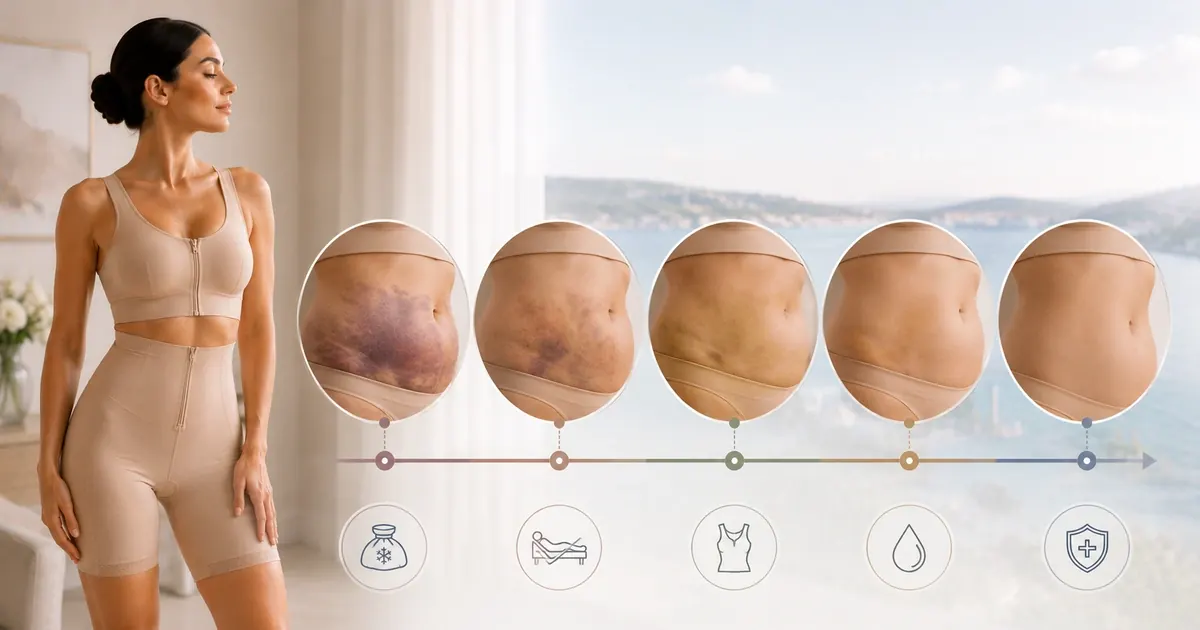
Why Swelling Happens After Liposuction
Swelling (oedema) after liposuction is an inevitable consequence of the surgical process and the body's inflammatory healing response. Understanding why it occurs removes much of the anxiety patients feel during the first weeks of recovery. For week-by-week milestones and other healing topics, visit our recovery overview.
The Inflammatory Response
Liposuction is a surgical procedure that disrupts subcutaneous tissue — fat cells, blood vessels, lymphatic channels, and connective tissue are all affected by the cannula's movement. The body responds with an acute inflammatory cascade: blood vessels dilate, capillary permeability increases, and protein-rich fluid flows into the interstitial space (the area between cells). This fluid accumulation is what produces visible and palpable swelling. The process peaks at 48–72 hours — the point at which inflammatory mediators are at their highest concentration — and then gradually subsides as the body clears the fluid through the lymphatic system.
Tumescent Fluid Retention
Modern liposuction techniques use tumescent fluid — a large volume of diluted lidocaine and adrenaline solution injected into the treatment area before fat removal. While much of this fluid is removed during the procedure, a portion remains in the tissues and contributes to early post-operative swelling. Tumescent fluid typically drains out through the small incision sites over the first 24–48 hours, which is why you experience significant fluid drainage on dressings and pads immediately after surgery.
Lymphatic Disruption
The cannula disrupts small lymphatic vessels in the treated area. Since the lymphatic system is responsible for draining interstitial fluid, its temporary impairment means fluid clearance is slower than normal. This contributes to the prolonged nature of post-liposuction swelling — while the acute inflammatory phase resolves within days, lymphatic recovery takes weeks to months, explaining why residual swelling persists for 3–6 months.
Gravity and Dependent Oedema
Post-surgical fluid follows gravity. Patients who have had abdominal liposuction often notice swelling and bruising migrating downward to the pubic area, upper thighs, or even the lower legs over the first week. This is a normal gravitational effect and does not indicate that those areas were treated or damaged. Similarly, swelling is often worse later in the day after prolonged standing or sitting and improves overnight with elevation.
Swelling Timeline: What to Expect
Post-liposuction swelling follows a predictable trajectory. Understanding this timeline helps you recognise what is normal at each stage and when something may warrant medical attention.
| Timepoint | Swelling Level | What You'll Notice |
|---|---|---|
| Day 0 (surgery day) | Moderate — masked by compression and anaesthesia | Treated area feels swollen and firm; fluid draining onto pads |
| Days 1–3 | Peak — maximum swelling at 48–72 hours | Area looks larger than before surgery; tight, heavy feeling; bruising emerging |
| Days 4–7 | High but beginning to decrease | Swelling softening; fluid drainage slowing; first improvement noticeable under garment |
| Weeks 2–3 | Moderate — most visible swelling resolving | Early contour emerging; may still fluctuate with activity; bruising fading |
| Weeks 4–6 | Mild — 50–70% resolved | Contour becoming clearer; garment transitioning to part-time; fibrosis may be developing |
| Months 2–3 | Minimal — 80–90% resolved | Near-final contour visible; residual firmness from fibrosis softening |
| Months 3–6 | Resolved — final result visible | All swelling gone; skin fully retracted; contour stable |
Why Swelling Fluctuates During Weeks 2–4
Many patients notice that swelling is not a straight line downward — it fluctuates. You may wake up with less swelling and find it worse by evening. A particularly active day, warm weather, salty food, or prolonged standing can temporarily increase swelling even after it has been improving. This is normal and reflects the still-recovering lymphatic system's limited capacity to handle fluctuating fluid loads. It does not mean your recovery is going backwards.
Factors That Affect Swelling Duration
Not all patients experience the same swelling trajectory. Factors that increase swelling duration and severity include: larger volume of fat removed, multiple areas treated simultaneously (especially Lipo 360), pre-existing lymphatic insufficiency, inconsistent compression garment wear, early return to strenuous activity, high-sodium diet, and individual variation in inflammatory response. Patients who are diligent with compression and attend lymphatic drainage massage sessions typically experience faster resolution.
Bruising: Stages & Timeline
Bruising after liposuction is caused by blood leaking from small vessels disrupted during the cannula's passage through subcutaneous tissue. The extent of bruising varies significantly between patients and depends on the technique used, the area treated, and individual factors such as skin type, age, and medication use.
| Stage | Timeframe | Colour | What's Happening |
|---|---|---|---|
| 1 — Acute | Days 0–2 | Dark red / purple | Fresh blood in tissue; bruises appearing and spreading |
| 2 — Peak | Days 3–5 | Deep purple / blue-black | Maximum bruising extent; haemoglobin breaking down; bruises may migrate downward |
| 3 — Transition | Days 5–10 | Green / dark yellow | Biliverdin stage — body actively clearing blood pigments |
| 4 — Resolution | Days 10–21 | Light yellow / fading | Bilirubin stage — final clearance; bruising fading from edges inward |
| 5 — Cleared | Week 3+ | Normal skin colour | All blood pigments cleared; no residual discolouration |
Bruise Migration
Bruising often appears in areas that were not directly treated. Blood follows gravity through tissue planes, so abdominal liposuction bruising frequently migrates to the pubic area, groin, and upper thighs. Flank liposuction bruising may appear on the lower back or hips. This migration typically occurs during days 3–7 and is completely normal — it does not indicate that the surgeon made an error or that additional tissue was damaged.
Factors That Increase Bruising
Certain factors make bruising more extensive or longer-lasting: blood-thinning medications (aspirin, NSAIDs, anticoagulants) should be stopped before surgery as directed by your surgeon; herbal supplements including fish oil, vitamin E, ginkgo biloba, and garlic can thin the blood; age-related skin thinning and capillary fragility increase bruising in older patients; larger treatment areas and more aggressive fat removal cause more tissue disruption; and certain techniques (ultrasound-assisted or laser-assisted liposuction) may cause different bruising patterns compared to traditional tumescent liposuction.
Normal vs Concerning Swelling
Distinguishing between expected post-operative swelling and swelling that indicates a complication is one of the most important skills during recovery. The vast majority of swelling is normal, but knowing the warning signs ensures you seek timely medical attention when needed.
| Feature | Normal Swelling | Concerning — Contact Surgeon |
|---|---|---|
| Pattern | Bilateral, even, distributed across treated area | Markedly asymmetric; significantly worse on one side |
| Trajectory | Peaks at 48–72h, then gradually improves | Sudden increase after day 5 or worsening after improvement |
| Skin appearance | Mild discolouration from bruising; normal temperature | Red, hot, or shiny skin over the swollen area |
| Consistency | Firm and evenly distributed | Soft, fluid-filled, fluctuant (possible seroma) |
| Pain | Soreness that improves daily | Pain that increases after the first 3 days |
| Temperature | Normal or mildly elevated for 48h | Fever above 38.5°C (101.3°F) |
| Associated symptoms | None beyond expected soreness and fatigue | Chest pain, shortness of breath, leg pain/swelling |
Seroma: Fluid Collection After Lipo
A seroma is a pocket of clear fluid (serum and lymphatic fluid) that accumulates in the space created by fat removal. It presents as a soft, fluctuant, often visible swelling that may feel like a water balloon under the skin. Seromas typically develop between days 5 and 21. They are more common after large-volume liposuction and in patients who do not wear their compression garment consistently. Small seromas may resolve on their own; larger ones require aspiration (needle drainage) by your surgeon. Untreated seromas can trigger increased fibrosis.
Haematoma: When Bruising Becomes a Problem
A haematoma is a collection of blood — distinct from a seroma (which is clear fluid). It presents as a firm, tender, and sometimes expanding swelling that is often darker in colour than surrounding bruising. Small haematomas resolve on their own with compression. Large or expanding haematomas may require surgical drainage. If you notice a rapidly increasing, hard, painful swelling in the first 48–72 hours, contact your surgeon immediately.
How to Reduce Swelling Faster
While swelling resolution ultimately follows the body's healing timeline, several evidence-supported measures can reduce its severity and duration. None of these eliminate swelling — they optimise the conditions for the body to clear it efficiently.
Compression Garment: The Most Important Factor
Consistent compression garment wear is the single most impactful measure for controlling post-operative swelling. A clinical study on post-liposuction garment use confirmed that compression significantly reduces swelling duration and severity.2 Wear your garment 24/7 for the first 3 weeks, then part-time for weeks 4–6.
Hydration and Diet
Adequate hydration supports lymphatic function — the system responsible for clearing interstitial fluid. Aim for 2–3 litres of water per day during recovery. Reduce sodium intake during the first 4 weeks, as sodium promotes water retention and worsens swelling. Increase potassium-rich foods (bananas, sweet potatoes, leafy greens) which help balance sodium levels.
Elevation and Rest
Elevating the treated area above heart level when resting encourages gravitational drainage of fluid toward the central lymphatic system. For abdominal liposuction, lying with legs slightly elevated on pillows helps. Avoid prolonged standing or sitting during the first 2 weeks. Gentle walking is encouraged for circulation, but long periods on your feet should be avoided.
Avoid Heat and Alcohol
Heat causes blood vessel dilation and increases fluid leakage into tissues. Avoid hot baths, saunas, steam rooms, and prolonged sun exposure during the first 4–6 weeks. Alcohol has a similar vasodilatory effect and also impairs immune function during healing. Avoid alcohol for at least the first 2 weeks, and minimise it for 4–6 weeks.
Lymphatic Drainage Massage (MLD)
Manual lymphatic drainage (MLD) is a specialised, gentle massage technique that stimulates the lymphatic system to clear post-surgical fluid from treated areas more efficiently. It is one of the most commonly recommended post-liposuction recovery measures alongside compression garment wear.
A 2014 clinical study found that patients receiving MLD after liposuction had significantly reduced post-operative oedema compared with controls and reported improved comfort during early recovery.1
How MLD Works
MLD uses very light, rhythmic, pumping strokes in the direction of lymphatic flow. Unlike deep tissue massage, MLD works on the superficial lymphatic vessels just beneath the skin. The gentle pressure stimulates lymphatic vessel contraction, moving protein-rich interstitial fluid from the congested treatment area toward functioning lymph nodes for processing and clearance. This reduces both the volume and duration of swelling.
MLD Protocol After Liposuction
- Start timing: 7–14 days post-surgery (as approved by your surgeon)
- Frequency: 2–3 sessions per week initially, then weekly
- Total sessions: 4–8 sessions over 4–6 weeks
- Duration: 45–60 minutes per session
- Practitioner: Vodder-certified or LANA-certified lymphatic therapist
| Parameter | Recommendation |
|---|---|
| Start timing | 7–14 days post-surgery (surgeon approval) |
| Frequency | 2–3 sessions/week initially, then weekly |
| Total sessions | 4–8 over 4–6 weeks |
| Session length | 45–60 minutes |
| Practitioner | Vodder- or LANA-certified lymphatic therapist |
| Pressure | Very light — skin should barely move |
| Direction | Toward nearest lymph node group (groin for lower body; axilla for upper) |
Self-Massage at Home
Once your surgeon approves it (typically at 3–4 weeks), gentle self-massage using light, sweeping strokes toward the nearest lymph node group can supplement professional MLD sessions. Always work with clean hands, use very light pressure (the skin should barely move), and stroke toward the groin (for lower body) or axilla (for upper body). Stop if you experience pain. Self-massage is a supplement to — not a replacement for — professional MLD sessions and consistent compression.
When to Contact Your Surgeon
Most swelling and bruising after liposuction is a normal, expected part of healing. However, certain patterns of swelling require prompt medical evaluation to rule out complications such as infection, seroma, haematoma, or thromboembolism.
Urgent: Call Emergency Services
- Chest pain or shortness of breath — possible pulmonary embolism
- Sudden severe leg pain with calf swelling — possible deep vein thrombosis (DVT)
- Loss of consciousness or confusion — possible fat embolism (rare)
Same-Day: Contact Your Surgeon
- Fever above 38.5°C (101.3°F) — possible infection
- Sudden significant swelling increase after day 5 — possible seroma or haematoma
- Red, hot, tender skin over the swollen area — possible infection or cellulitis
- Rapidly expanding firm swelling in the first 72 hours — possible haematoma
- Foul-smelling or purulent discharge from incision sites — possible wound infection
- Pain that is increasing rather than decreasing after day 3
Next Appointment: Discuss with Surgeon
- Swelling that has not improved at all by week 3
- Significant asymmetry that persists beyond week 4
- Soft, fluctuant swelling suggestive of small seroma
- Persistent numbness beyond 6–8 weeks (nerve recovery is slow but expected)
Frequently Asked Questions
-
Swelling peaks at 48–72 hours and gradually improves. Most visible swelling resolves within 2–3 weeks. Residual swelling continues to resolve over 3–6 months. The final contour is visible at 3–6 months for standard procedures and up to 6–9 months for Lipo 360.
-
Bruising peaks at days 3–5 and progresses through colour changes (purple → green → yellow). Most visible bruising resolves within 2–3 weeks. Bruising may migrate downward due to gravity — abdominal bruising appearing on the upper thighs is normal.
-
Yes. Swelling increases during the first 48–72 hours as the inflammatory response peaks. Fluctuations during weeks 2–4 are also normal — swelling may increase after activity, in warm weather, or after prolonged standing. Sudden worsening after day 5 with fever or severe pain is not normal and should be reported to your surgeon.
-
Yes. A 2014 clinical study found that MLD significantly reduces post-liposuction oedema. Most surgeons recommend 4–8 sessions starting at 1–2 weeks post-surgery, performed by a Vodder- or LANA-certified therapist.1
-
The most effective measures: wear your compression garment consistently, attend lymphatic drainage massage sessions, stay well-hydrated, eat a low-sodium diet, elevate the treated area when resting, walk gently from day 1–2, and avoid alcohol, hot baths, and strenuous exercise during the first 3–4 weeks.
-
Contact your surgeon for: sudden swelling increase after day 5, fever above 38.5°C (101.3°F), hot/red/tender swelling, markedly asymmetric swelling, or increasing pain. Call emergency services for chest pain, shortness of breath, or sudden leg pain/swelling (possible thromboembolism).