
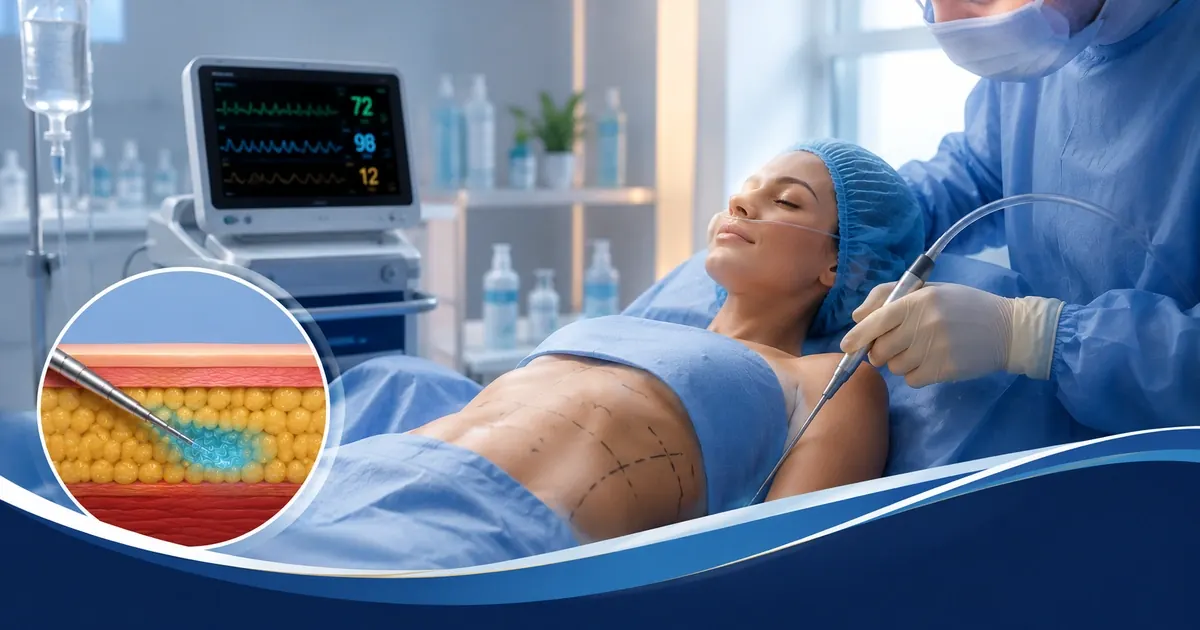
What "Awake" Liposuction Really Means
The term "awake liposuction" (also called local anaesthesia liposuction or office-based lipo) describes standard tumescent liposuction performed without intravenous sedation or general anaesthesia. The patient is conscious throughout the procedure, but the treatment area is completely numb because of the dilute lidocaine solution injected as part of the tumescent technique.
To understand what distinguishes awake lipo from other options, it helps to understand the full spectrum of anaesthesia levels available for liposuction — and to recognise where the real differences lie.
Local-Only vs Twilight vs General Anaesthesia
Surgeons performing liposuction can choose from three broad anaesthesia levels. All three use tumescent fluid; what changes is the patient's level of consciousness:
| Level | Patient state | Breathing | Specialist required | Common term |
|---|---|---|---|---|
| Local only | Fully conscious; area numb | Normal, unassisted | No — surgeon administers | "Awake lipo" |
| IV sedation | Drowsy, responsive to voice; reduced awareness | Normal, unassisted | Sometimes — nurse or anaesthesiologist | "Twilight" anaesthesia |
| General anaesthesia | Fully unconscious; no awareness | Intubated or LMA-supported | Yes — anaesthesiologist required | "GA" or "sleep" |
In all three scenarios, the liposuction itself — the infiltration of tumescent fluid and the cannula suction — is identical. The quality of fat removal, the scarring profile, and the long-term result are not affected by the choice of anaesthesia level.
The Role of Tumescent Fluid
Understanding awake liposuction requires understanding the tumescent technique, because the fluid is what makes local-anaesthesia liposuction possible in the first place.
Tumescent fluid is an infiltration solution containing (as described in the StatPearls liposuction reference):3
- Normal saline (large volume): The carrier — typically 1 litre per treated area. The volume swells the fat layer firm ("tumescent"), creating a physical buffer between the cannula and deeper structures.
- Lidocaine (dilute local anaesthetic): At 0.05–0.1% concentration. This is far more dilute than dental or injection lidocaine, but the large volume means a substantial total dose is delivered to the fat layer — enough to render the area numb for the duration of the procedure.
- Epinephrine/adrenaline (vasoconstrictor): At approximately 1:1,000,000 dilution. Epinephrine causes blood vessels in the fat layer to constrict, dramatically reducing intra-operative blood loss (from 20–40% of aspirate in pre-tumescent techniques to under 1% with tumescent).
- Sodium bicarbonate: Buffers the solution's pH close to neutral, reducing the stinging sensation during injection.
Because lidocaine is absorbed very slowly from subcutaneous fat (over 8–12 hours rather than the minutes typical of IV injection), much higher total doses can be used safely than would be possible intravenously. This slow absorption is what enables large enough doses to produce reliable local anaesthesia across a meaningful treatment area.
Why "Awake" Is Often a Marketing Term
Clinics marketing "awake liposuction" as a premium or novel offering are, in most cases, describing standard tumescent liposuction performed under local anaesthesia — the technique has been in routine use since the late 1980s and early 1990s, when dermatologic surgeons including Jeffrey Klein demonstrated that liposuction under local anaesthesia alone produced excellent outcomes with very low complication rates, as a national safety survey confirmed.1
The marketing framing is not inaccurate, but it can create a false impression that "awake lipo" is a newer, safer, or more advanced form of liposuction. It is not. It is the same procedure — the choice of whether to add IV sedation or general anaesthesia is a separate decision that does not affect what happens to the fat. Patients comparing clinics should be aware that "awake lipo," "local anaesthesia lipo," "office-based lipo," and "tumescent lipo under local" all refer to the same thing.

What the Patient Experiences
The patient experience of awake liposuction is quite different from what most people imagine when they think of surgery. Because there is no general anaesthesia, patients are aware of what is happening around them throughout, though the treatment area is numb. Understanding each phase helps patients prepare realistic expectations.
The Infiltration Phase — the Most Uncomfortable Part
The first step is injecting the tumescent fluid into the fat layer through small-gauge needles. This is widely agreed by patients and surgeons to be the most uncomfortable phase of the entire procedure.
What patients typically feel during infiltration:
- Initial needle stings: Each needle entry point produces a brief, sharp sting. Most patients describe this as similar to a dental injection — uncomfortable but brief. Sodium bicarbonate in the solution reduces (but does not eliminate) this sensation.
- Pressure and fullness: As large volumes of fluid are injected, the treated area becomes tight, heavy, and firm. For a typical abdominal or flank area, several hundred millilitres to over a litre of fluid may be infiltrated. This pressure sensation is sustained and can be intense.
- Increasing numbness: As infiltration continues, the area progressively numbs. The last portion of the infiltration is typically much less uncomfortable than the beginning because the earlier-infiltrated fluid has already produced partial anaesthesia.
The infiltration phase typically takes 15–30 minutes for a single small area (chin) and up to 45–60 minutes for a medium area (abdomen or flanks). Surgeons managing patient comfort during this phase may use distraction techniques, verbal reassurance, or gentle infiltration speed.
The Waiting Period
After infiltration is complete, the surgeon waits — typically 15–30 minutes — before beginning suction. This wait serves two purposes: it allows the lidocaine to fully distribute through the fat tissue and achieve maximum anaesthetic effect, and it allows the epinephrine to produce maximal vasoconstriction. Skipping or shortening this wait reduces the blood-loss benefit and may leave the area incompletely numb at the time of suction.
During the waiting period, patients typically:
- Remain on the procedure table
- Feel the treated area as numb, heavy, and slightly swollen
- Are alert — they can talk, use their phone, or listen to music
- Experience no pain in the treated area, though adjacent areas may be tender
If multiple areas are being treated, the surgeon may begin infiltrating a second area while the first area is in its waiting period — sequencing the infiltration to minimise total procedure time.
The Suction Phase
Once the tumescent fluid has taken full effect, the suction phase begins. Tiny incisions (2–4 mm) are made at pre-planned entry points. A narrow cannula — typically 3–4 mm in diameter for standard suction, smaller for more precise areas — is inserted and moved through the fat layer under the skin.
What patients feel during suction:
- Pressure and movement: The pushing and pulling of the cannula through the fat layer creates a rhythmic pressure sensation. This is not painful (the area is numb) but it is perceptible, and some patients find the sensation strange or mildly unsettling.
- Tugging and vibration: Depending on the technique (standard suction vs power-assisted vs VASER), patients may feel vibrations or more pronounced movement. Most describe this as tolerable.
- Sound: The suction machine is audible. Some patients find this reassuring (they can hear that the procedure is progressing); others prefer to use headphones.
- Awareness of position changes: Surgeons may ask awake patients to reposition — standing briefly, changing their arm position, etc. — to access different areas or assess the result during the procedure. This is a practical advantage of the patient being awake.
The suction phase itself is described by most awake lipo patients as less uncomfortable than the infiltration phase. A survey-scale study of awake tumescent liposuction patients found that the majority rate the suction phase as tolerable or comfortable once fully numb.1
After the Procedure
In the hours and days following awake liposuction, patients experience a predictable sequence:
| Timeframe | Typical experience |
|---|---|
| 0–6 hours post-op | Area remains numb from residual tumescent lidocaine. Patient is alert, can walk, and can travel home accompanied. Tumescent fluid drains from incision sites — expected, not alarming. Compression garment fitted. |
| 6–24 hours | Numbness wears off progressively. Pain and soreness increase as sensation returns — managed with prescribed analgesics (typically NSAIDs or paracetamol/acetaminophen ± a short course of a mild opioid for larger areas). Swelling begins. |
| Days 2–4 | Peak soreness — most comparable to intense muscle ache rather than sharp pain. Bruising becomes visible. Continued drainage from incision sites may occur for 24–48 hours total. Most patients manage with over-the-counter analgesia by day 2–3. |
| Days 5–14 | Soreness resolves substantially. Swelling persists — result not yet visible. Compression garment continues. Light activity resumes; strenuous exercise typically restricted 3–4 weeks. |
| Weeks 4–12 | Swelling resolves progressively. Final result becomes visible at approximately 3 months when all post-operative swelling has resolved. |
Because there is no general anaesthesia, awake lipo patients avoid the post-operative nausea, drowsiness, and extended recovery room time associated with GA. Most patients can return home within 30–60 minutes of the procedure concluding, provided they are accompanied.
Advantages of Awake Liposuction
Choosing local anaesthesia over sedation or general anaesthesia for liposuction carries several clinically meaningful advantages, not merely cosmetic ones.
Avoiding General Anaesthesia Risks
General anaesthesia is extraordinarily safe in healthy adults when administered by a skilled anaesthesiologist, but it is not without risk. The most commonly discussed risks (as outlined in the StatPearls liposuction complications review) include:3
- Respiratory complications: Aspiration, laryngospasm, bronchospasm — rare but life-threatening
- Cardiovascular events: Hypotension, arrhythmia — more relevant in patients with pre-existing cardiac conditions
- Post-operative nausea and vomiting (PONV): Occurs in roughly 30% of GA patients; can delay discharge and is unpleasant
- Adverse drug reactions: Including rare but severe reactions such as malignant hyperthermia in susceptible individuals
- Cognitive effects: Post-operative cognitive dysfunction (POCD) is recognised especially in older patients
Eliminating general anaesthesia removes all of these risk categories entirely for the liposuction procedure. For patients with existing medical conditions (cardiac, pulmonary, metabolic, obesity-related comorbidities) that increase GA risk, local anaesthesia liposuction may represent the only safe route to having the procedure at all.
Lower Cost
The anaesthesiologist's professional fee is one of the largest single line items on a liposuction invoice. In the United States, anaesthesiologist fees for a liposuction case typically range from $600 to $1,500+ depending on duration and region. In Turkey and other popular medical tourism destinations, the cost difference is proportionally significant within the overall procedure fee.
Beyond the professional fee, avoiding general anaesthesia also eliminates the cost of:
- The anaesthetic drugs themselves (propofol, opioids, reversal agents)
- Additional monitoring equipment and support staff
- Extended recovery room time and staffing
- In some cases, the requirement for a fully equipped operating room versus a certified procedure room
For patients financing the procedure, or comparing prices across providers, understanding that "with local only" inherently costs less than "with GA" explains part of the price variation seen between clinics.
Faster Discharge and Convenience
Without general anaesthesia, there is no induction or recovery period. Patients are alert immediately when the procedure concludes. Key discharge advantages include:
- No recovery room monitoring period (typically 1–2 hours required after GA)
- No post-anaesthesia nausea to manage before safe discharge
- No requirement to fast for 6–8 hours pre-operatively in most local-only protocols (the surgeon will specify their own protocol)
- Ability to attend a single-day appointment without arranging a pre-operative anaesthesia consultation in many cases
- Possibility of the procedure being performed in an office-based or clinic setting rather than a hospital operating room
| Dimension | Local only ("awake") | IV sedation | General anaesthesia |
|---|---|---|---|
| Patient comfort during procedure | Conscious; mild discomfort during infiltration | Drowsy; reduced awareness of discomfort | Fully unconscious; no awareness |
| GA-specific risks | None | Minimal (partial sedation) | Present (PONV, respiratory, cardiovascular) |
| Cost | Lowest | Moderate | Highest |
| Discharge time | 30–60 min post-procedure | 1–2 hours post-procedure | 2–4 hours post-procedure |
| Fasting requirement | Usually none (clinic-dependent) | Typically 4–6 hours | 6–8 hours (nil by mouth) |
| Facility requirement | Certified procedure room or clinic | Certified procedure room or day-surgery unit | Fully equipped operating room |
| Patient position feedback | Full — patient can stand, move, report sensation | Limited | None — patient is repositioned while unconscious |
| Volume ceiling | Present (lidocaine dosing limit) | Partial (tumescent still used) | None from anaesthesia perspective |
Limits and Limitations
Awake liposuction is a well-established and safe technique — but it is not appropriate for every patient or every procedure. Understanding the genuine limits is important for setting accurate expectations and choosing the right approach.
Volume Limits — the Lidocaine Safety Ceiling
The most important pharmacological constraint on awake liposuction is the safe maximum dose of lidocaine. In tumescent liposuction, lidocaine is absorbed very slowly from subcutaneous fat — peak plasma levels occur 8–12 hours after infiltration, not minutes. This pharmacokinetic profile is what allows much higher total doses than would be safe given intravenously.
Research by Klein, who developed the tumescent technique, established that tumescent lidocaine doses of up to 35–55 mg/kg appear safe under careful clinical monitoring.4 The traditional maximum safe dose for IV lidocaine (4.5 mg/kg) does not apply to tumescent administration — but there is still a ceiling.
The practical implication:
- A patient weighing 70 kg could safely receive roughly 2,450–3,850 mg of tumescent lidocaine
- At 0.1% concentration, this equates to approximately 2.5–3.9 litres of tumescent fluid
- For a single moderate area (e.g., the abdomen), this is typically sufficient
- For a large multi-area case (e.g., Lipo 360: abdomen + flanks + back + thighs simultaneously), the required fluid volume would exceed the safe lidocaine dose ceiling
This means that the limitation of local-only liposuction is not a limitation of effectiveness — it is a safety constraint on how much area can be treated in a single session without adding sedation or general anaesthesia. Surgeons performing large-volume procedures either stage the surgery across multiple sessions or use sedation/GA to allow the tumescent formula to be adjusted (lower lidocaine concentration, supplemented by systemic anaesthesia).
Anxiety and Patient Suitability
Being awake during a surgical procedure is not distressing for all patients, but it is for some. Even with complete local anaesthesia and no pain, the experience of lying on a procedure table, hearing surgical sounds, feeling pressure and movement, and remaining still for 60–90 minutes or more can be psychologically challenging.
Factors that predict poorer tolerance of awake liposuction include:
- Pre-existing anxiety disorder or needle phobia
- Prior negative surgical experiences
- High baseline anxiety about the procedure
- Procedures planned for areas the patient finds personally difficult (e.g., abdominal procedures in patients with body image concerns)
Some clinics offer oral anxiolytics (e.g., benzodiazepines) as a pre-medication for local-only procedures. This can meaningfully reduce anxiety without the risks of full IV sedation, though it requires that the patient has a companion to drive them home.
Patient preference is a fully valid reason to choose sedation or general anaesthesia even for a case that is technically suitable for local anaesthesia. The surgeon should support either preference without pressure.
Areas That Are Harder Under Local Anaesthesia
Certain anatomical regions are more difficult to adequately numb with tumescent infiltration alone. These include:
- The back and posterior flanks: The overlying skin in these areas is thicker, and injecting sufficient tumescent fluid for adequate coverage is technically more challenging. Many surgeons prefer sedation for significant back-area liposuction.
- The inner thighs and medial knees: Sensitive areas where achieving complete anaesthesia under local alone can be incomplete, particularly for more extensive treatment.
- The periumbilical abdomen in patients with previous abdominal surgery: Scar tissue can disrupt normal fluid spread, creating areas of incomplete anaesthesia.
- Gynecomastia / male chest: The fibrous nature of glandular tissue makes infiltration and suction technically more demanding, and complete local anaesthesia can be harder to achieve reliably.
This does not mean these areas cannot be treated under local anaesthesia — experienced surgeons with high-volume local-only practices manage them routinely. It does mean that for these areas, the risk of needing additional intra-operative pain management is higher, and realistic discussions about adding sedation should happen at the pre-operative consultation.
Who Is and Is Not a Candidate
Candidacy assessment for awake liposuction involves medical, anatomical, and psychological considerations. Not every patient is suitable, and not every procedure is appropriate for local anaesthesia alone.
Ideal Candidate for Local-Only Liposuction
The patient best suited for awake liposuction typically has all of the following characteristics:
- Isolated fat deposits in one or two areas — not multiple simultaneous zones
- Moderate volume to be removed — not a large-volume case
- Reasonable baseline anxiety level — no significant procedure-related phobia
- Realistic understanding of what the awake experience involves
- No medical contraindications to lidocaine or epinephrine (see below)
- Willingness to remain still for the duration of the procedure
The areas most commonly and most successfully treated under local anaesthesia only include: submental chin and neck, upper arms, bra-line area, isolated flanks or love handles, inner thighs, and knees. A dedicated series of 695 consecutive submental liposuctions under local anaesthesia confirmed excellent safety and effectiveness for chin and neck fat in particular.2
When Sedation Is Recommended
Sedation (IV midazolam, IV propofol at sub-GA doses, or inhaled nitrous oxide) is frequently recommended as an add-on when:
- The patient reports significant anxiety about being awake despite adequate explanation
- Multiple areas will be treated in a single session, increasing procedure duration
- The planned area is one known to be harder to numb adequately under local alone (back, inner thigh)
- The estimated procedure time exceeds 90–120 minutes, beyond which patient tolerance on the table typically declines
- The patient has a prior history of inadequate local anaesthesia (some individuals metabolise lidocaine faster or have anatomical variation)
Light IV sedation preserves the safety advantages of tumescent technique while adding meaningful patient comfort. It is a reasonable middle ground between fully awake and full general anaesthesia.
Medical Contraindications
| Condition | Implication for awake lipo | Recommendation |
|---|---|---|
| Lidocaine allergy or prior adverse reaction | Contraindication to tumescent local anaesthesia | Seek allergy testing or consider GA-only approach |
| Cardiac arrhythmia (Class I/III antiarrhythmics) | Drug interaction risk — lidocaine is antiarrhythmic; additive effects possible | Cardiology review before any liposuction |
| Severe uncontrolled hypertension | Epinephrine in tumescent fluid may temporarily elevate blood pressure | Blood pressure must be controlled pre-operatively |
| Thyrotoxicosis / hyperthyroidism | Epinephrine sensitivity increased; systemic effects amplified | Thyroid function must be normalised before procedure |
| MAOI antidepressants | Dangerous interaction with epinephrine — hypertensive crisis risk | Absolute contraindication; discuss with prescriber |
| Low body weight / BMI <18 | Lidocaine dose per kg is relatively higher for same treatment volume | Volume limits apply more strictly; careful dose calculation required |
| Hepatic impairment | Lidocaine is metabolised by the liver; impaired clearance increases toxicity risk | Surgeon review; dose reduction or GA may be preferred |
These contraindications apply to the tumescent fluid components — not to liposuction itself. Patients with contraindications to tumescent local anaesthesia can often still have liposuction with appropriate anaesthesia adjustments (e.g., very dilute or epinephrine-free tumescent with general anaesthesia supplementation).
Safety Evidence
The safety record of tumescent liposuction, particularly under local anaesthesia, is among the most favourable of any cosmetic surgical procedure. The evidence base includes two landmark datasets and a substantial body of pharmacological research on lidocaine safety in tumescent use.
The 15,336-Patient National Survey — Zero Fatalities
The most-cited safety dataset for awake liposuction comes from a national survey published by Hanke and colleagues in 1995, which remains the reference standard for local anaesthesia liposuction safety.1
Key findings from the survey of 15,336 tumescent liposuction patients:
- Fatalities: zero. No deaths occurred in over 15,000 procedures performed primarily under local tumescent anaesthesia.
- Complication rate: 0.1%. Adverse events (primarily minor wound infections, haematomas, and prolonged swelling) occurred in approximately 1 in 1,000 cases.
- No systemic lidocaine toxicity events were reported despite the large volumes of tumescent fluid used.
- Procedures were performed in office and clinic settings — not hospital operating rooms.
This compares starkly with historical data from pre-tumescent liposuction (dry/wet technique under GA), which reported fatality rates estimated at 1 in 5,000 to 1 in 10,000 procedures, primarily from fluid imbalance and GA-related complications.
It is important to note that the survey covered tumescent liposuction broadly — the safety advantage is attributable to the tumescent technique itself (reduced blood loss, local anaesthesia) rather than to the absence of sedation per se. However, avoiding general anaesthesia is a component of why the outcomes were so favourable.
The 695-Case Submental Liposuction Series
A more targeted dataset comes from a published series of 695 consecutive submental (chin) liposuctions performed under local anaesthesia.2
This series is significant for several reasons:
- It demonstrates that a high-volume practice can safely perform chin and neck liposuction under local anaesthesia alone across nearly 700 consecutive cases without serious adverse events.
- It provides the clearest evidence specifically for the most commonly requested awake lipo procedure — submental fat removal.
- Outcomes (fat removal, patient satisfaction, complication rates) were consistent with or superior to those reported in sedation and GA series for the same anatomical area.
- The series confirms that patient selection and operator experience are the key determinants of outcome — not the choice of local vs general anaesthesia per se.
Lidocaine Toxicity — Signs and Prevention
While the safety record of tumescent liposuction is excellent, surgeons operating under local anaesthesia must be trained in recognising and responding to signs of lidocaine toxicity — the primary pharmacological risk of the technique, as Klein's pharmacokinetic research details.4
Early signs of lidocaine toxicity (typically neurological):
- Perioral numbness or tingling (a classic early warning)
- Tinnitus (ringing in the ears)
- Lightheadedness or dizziness
- Visual or auditory disturbances
- Metallic taste
- Confusion or disorientation
Late-stage toxicity (cardiovascular, rare in tumescent use):
- Seizures
- Cardiac arrhythmia
- Cardiovascular collapse
Prevention relies on:
- Strict adherence to weight-based lidocaine dose calculations
- Using correctly diluted tumescent solution
- Monitoring patients throughout the procedure
- Not exceeding the planned treatment volume for a single session
- Ensuring the clinic has IV lipid emulsion available as an antidote for severe local anaesthetic systemic toxicity (LAST)
Because awake patients can report early symptoms (tingling, dizziness, tinnitus) themselves — symptoms that a sedated or anaesthetised patient could not report — there is an argument that awake procedures provide an additional safety margin through this real-time patient feedback. This is one of the less-discussed practical advantages of local-only liposuction.
Cost Compared to Sedation and General Anaesthesia
One of the most practically significant advantages of awake liposuction is cost. The anaesthesia component of a liposuction procedure can represent a substantial proportion of the total fee, and eliminating or reducing it produces real savings for patients.
| Anaesthesia | Anaesthesiologist fee (US) | Facility required | Discharge time | Pre-op fasting | Relative total cost |
|---|---|---|---|---|---|
| Local only (awake) | None — surgeon administers | Certified clinic or procedure room | 30–60 min | Usually none | Lowest |
| IV sedation (twilight) | $400–$900 | Certified procedure room or day-surgery unit | 1–2 hours | 4–6 hours | Moderate |
| General anaesthesia | $600–$1,500+ | Fully equipped operating room | 2–4 hours | 6–8 hours (nil by mouth) | Highest |
In medical tourism destinations such as Turkey, where all-inclusive package pricing is common, the cost differential between local-only and GA-based procedures is often folded into a single package price and therefore less visible to the patient. However, it contributes to why small-area procedures (chin, arms) at specialist clinics are priced significantly lower than full multi-area packages that include GA.
Patients comparing quotes should ask specifically: "Is the quoted price for local anaesthesia, sedation, or general anaesthesia?" — since this affects both the cost and the patient experience, and clinics do not always make this explicit in their marketing materials.
Frequently Asked Questions
-
Yes. Local tumescent anaesthesia liposuction — where the patient is conscious but the treatment area is completely numb — has been the standard approach for smaller areas since the late 1980s. A national survey of 15,336 such patients found zero fatalities and a 0.1% complication rate. The technique is most practical for single or double areas (chin, arms, flanks); large-volume multi-area cases typically require sedation to stay within the safe lidocaine dosing ceiling.
-
The most uncomfortable phase is the tumescent infiltration — initial needle stings followed by a sustained pressure sensation as large volumes of fluid are injected. Most patients compare the initial stings to dental injections. Once the area is fully numb (15–30 minutes after infiltration), the suction phase is typically pain-free; patients feel pressure and movement but not sharp pain. Soreness intensifies as the lidocaine wears off several hours after the procedure, and is managed with prescribed analgesia. Days 2–3 are typically the peak of post-operative discomfort.
-
For suitable cases and volumes, avoiding general anaesthesia removes that specific risk category entirely — no respiratory complications, no adverse GA drug reactions, no PONV. The 15,336-patient survey of largely local-anaesthesia tumescent liposuction found zero fatalities, comparing favourably to historical general-anaesthesia series. That said, awake liposuction introduces its own specific risk (lidocaine toxicity if dosing limits are exceeded), which is why experienced patient selection and strict dose calculation are essential. Neither approach is categorically "safer" in all circumstances — the right choice depends on the patient, the volume, and the area.
-
The procedure itself is identical — tumescent infiltration, cannula suction, the same recovery, the same results. The only difference is anaesthesia level: awake lipo uses local tumescent only; "regular" lipo may use IV sedation or general anaesthesia in addition. "Awake lipo" is partly a marketing term — it describes the same established tumescent technique rather than a distinct or superior procedure. Fat removal effectiveness, scarring, and long-term results are equivalent regardless of the sedation level chosen.
-
The standard IV lidocaine toxicity threshold (4.5 mg/kg) does not apply to tumescent administration, where absorption from subcutaneous fat is very slow. Research by Klein established that tumescent doses up to 35–55 mg/kg are safe under clinical monitoring. For a 70 kg patient, this means roughly 2,450–3,850 mg of lidocaine — enough for one or two moderate-sized areas. Large multi-area procedures would require more lidocaine than this ceiling allows, making sedation or general anaesthesia necessary for those cases.
-
A typical single-area awake liposuction procedure (e.g., submental chin lipo or one small zone) runs 60–90 minutes in total: approximately 20–30 minutes for tumescent infiltration, 15–30 minutes waiting for full anaesthetic effect, and 30–45 minutes for suction. Because there is no general anaesthesia induction or recovery room period, total clinic time is often shorter than an equivalent procedure under general anaesthesia. Patients are typically able to leave the clinic within 30–60 minutes of the procedure completing.