
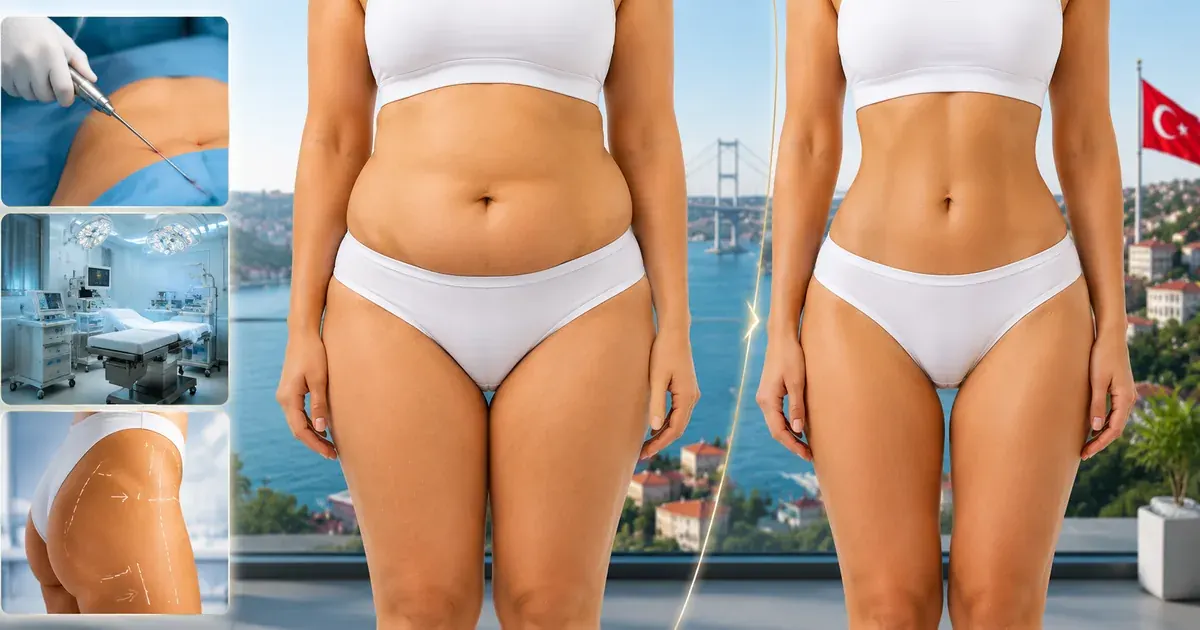
What Before/After Photos Can and Cannot Tell You
Before/after photo galleries are the most common tool patients use when researching liposuction in Turkey. They are also the most commonly misread. Understanding what a gallery image actually shows — and what it is deliberately not showing — changes how you interpret every set of photos you encounter.
Clinic Galleries Show Best Cases, Best Angles, and Optimal Lighting
Every clinic anywhere in the world — in Turkey, the US, the UK, or Australia — curates its before/after gallery. Surgeons and marketing teams select the cases that show the most dramatic and cleanest transformations. Cases with modest improvement, asymmetry, or complications are not typically included. This is not deceptive in a legal sense, but it creates a systematic selection bias that inflates patient expectations across the industry.
Photography variables amplify this further. The before photo may be taken in flat, even lighting that emphasises body contour and shadows, making volume look larger. The after photo may be taken in softer, more flattering light that reduces the appearance of remaining irregularities. Posed posture matters too: a patient standing with relaxed shoulders and slightly arched back in the after photo versus slumped posture in the before can make a meaningful visual difference unrelated to the surgery itself. When you look at a before/after pair, ask yourself whether lighting, posture, and angle are consistent between the two images. If they are not, treat the transformation as less meaningful than it appears.
Garment Compression in "Before" Photos vs None — Artificially Widening the Before
A subtler but significant issue is compression garment removal for "before" photographs. Some clinics photograph patients in loose, unflattering clothing in the before photo and in form-fitting or compression wear in the after photo. The compression garment smooths the surface contour and provides visible sculpting that has nothing to do with the surgical result. Conversely, some before photos show patients in everyday clothing that creates natural bunching or pulling of fabric, making the pre-operative silhouette appear less favourable.
The standard best practice is for before/after photos to be taken in consistent, minimal, form-neutral clothing — typically plain underwear or a swimsuit — in both images, with the same photographic distance and angle. When you see a before/after set where these variables are different between the two photos, the visual transformation you are seeing is partly explained by those differences. Look for photo sets that show matching attire and distance. These are more reliable indicators of surgical outcome.
Where to Find More Representative Outcomes
For a more honest distribution of outcomes — including the modest, the average, and the excellent — patient communities are more informative than clinic galleries. Reasons include: patients post their own results without curation, results appear at multiple time points, and patients discuss outcomes openly including complications and revision.
Useful sources for non-curated outcome data include: Reddit communities (r/PlasticSurgery and r/TummyTuck include substantial liposuction discussion), patient forums specific to Turkish medical tourism, and comparison threads on patient forums where users share photos months and years post-operatively. Reading through these communities for a few hours gives a far more realistic calibration of what a typical outcome looks like — and importantly, what factors correlate with better or worse outcomes. Medical tourism outcome data is also available in the published literature: a 2024 systematic review (PMID 38913202) analysed adverse outcomes reported in cosmetic surgery medical tourism, providing objective context on complication rates that clinic galleries never disclose.1
When the After Photo Was Taken Matters Enormously
The single most important question to ask about any before/after photo is: how many weeks or months after surgery was this taken? Most patients do not ask, and most galleries do not disclose. This omission is significant, because a photo taken at six weeks and one taken at six months can look dramatically different — both in the same patient, with no further treatment in between.
Swelling Timeline — Photos at 6 Weeks vs 6 Months Look Very Different
Post-liposuction swelling follows a well-documented multi-phase timeline. In the first two weeks, oedema is intense and widespread — the treated area typically looks larger than pre-operatively. Between weeks 2 and 6, the most visible bruising and bulk swelling resolve, and this is the period when many patients feel they are approaching their result. However, a deeper layer of post-surgical oedema persists well beyond this early phase. Studies on post-liposuction swelling document that residual oedema continues to reduce through months 2–6, with some areas (particularly the thighs and arms) showing measurable swelling reduction up to 9–12 months post-operatively.2
A patient photographed at six weeks may still have 30–50% of their residual swelling present in the treated area. The photo at this stage therefore understates the final result — the area will look more refined, smoother, and more contoured at six months. But this also means that the comparison is unfair: when you see a clinic gallery photo that says "6 weeks post-op," the result shown is not the final result. The improvement will continue for months after that photo was taken.
Why Most Clinic Photos Are Taken Too Early (3–6 Weeks Post-Op)
There is a practical reason why most clinic before/after photos are taken at 3–6 weeks: that is when the patient is still in contact with the clinic. For domestic patients, this corresponds to the last in-person follow-up appointment. For international medical tourism patients travelling from the UK, US, or elsewhere to Turkey, the patient is typically in Istanbul for 5–7 days post-operatively and then returns home — which means the clinic never sees or photographs the 3-month or 6-month result unless the patient sends photos voluntarily.
This structural bias means that clinic galleries for Turkish (and other international) providers are more likely to show early-stage results than domestic clinic galleries, simply because of the medical tourism follow-up gap. The surgical result is not inherently different — but the photographic documentation is more likely to capture a transitional rather than final state. When evaluating a Turkish clinic's gallery, mentally add 2–3 months to whatever recovery stage the photo represents, and treat the shown result as a floor rather than a ceiling.
How to Ask for Photos at Final Result (3–6 Months Minimum)
When consulting with a Turkish clinic, it is both reasonable and advisable to ask specifically for before/after photos taken at three months or later. This is not an unreasonable request — reputable surgeons with good long-term outcomes are typically happy to share them. Frame the request as: "Could you share cases where the after photo was taken at least 3–4 months post-operatively? I want to understand what a settled result looks like, not just early recovery."
Also ask whether the clinic has examples from patients with a similar starting point to your own — similar areas of concern, similar body frame, similar skin quality. The most useful comparison case is one that mirrors your own body rather than one that shows a maximally dramatic transformation on a different body type entirely.
| Post-op timeframe | Swelling status | How representative of final result |
|---|---|---|
| 2–4 weeks | Major swelling still present; bruising fading | Not representative — area may look larger than pre-op |
| 6–8 weeks | Bulk swelling largely resolved; deep oedema still active | Early indication only — 30–50% residual swelling typical |
| 3 months | Most visible swelling gone; some residual oedema remains | Reasonable early indicator — 10–20% residual swelling typical |
| 6 months | Near-final for most areas | Reliable for abdomen, flanks, chin — good baseline for assessment |
| 9–12 months | Final result for thighs, arms, Lipo 360 | Most accurate — full tissue remodelling complete |
Realistic Expectations by Area
Different body areas respond differently to liposuction — both in the magnitude of change achieved and in the timeline for that change to become fully visible. Understanding these differences prevents patients from drawing incorrect conclusions from early photos or from comparing results across different treated areas.
Abdomen and Flanks — What Typically Changes, What Doesn't
The abdomen and flanks are the most commonly treated areas and the areas where patients tend to see the most consistent and visible improvement. Liposuction here removes subcutaneous fat — the fat layer between the skin and the abdominal muscle wall. Well-performed liposuction with appropriate fat removal and good skin elasticity produces a visibly flatter, smoother abdominal profile and a more defined waist-to-hip ratio when viewing from the front or three-quarter angle.
What liposuction of the abdomen does not change: visceral fat (the deeper fat inside the abdominal cavity, around organs) is not treated by liposuction and does not reduce. Patients with a significant visceral fat component will notice a proportionately smaller visual improvement than those whose abdominal volume is primarily subcutaneous. Liposuction also does not tighten loose or excess skin — if there is skin laxity pre-operatively (from weight fluctuation, pregnancy, or ageing), liposuction alone will not address this and may make existing looseness more visible. This is the most common source of disappointment in abdominal liposuction: the patient expected their skin to contract around the reduced volume, but significant pre-existing laxity does not resolve with fat removal alone.
Chin and Neck — Clearest Early Result, Swelling Resolves Fastest
Submental (chin) and neck liposuction are the procedures where patients tend to see results earliest and most clearly. The treated area is small and well-vascularised, swelling is proportionately less severe, and there is limited post-surgical dead space to accumulate oedema. Patients often see a meaningful improvement by 3–4 weeks post-operatively, with a near-final result by 6–8 weeks for most.
The chin and neck also have an advantage in skin contracture: the facial skin typically has better elasticity than body skin and is under less gravitational pull, meaning it contracts well around the reduced fat volume. For patients with double-chin reduction as their primary goal and good skin quality, before/after photos taken at 6 weeks are actually fairly representative of the eventual final result — making this the one area where early clinic gallery photos are reasonably reliable.
Thighs and Arms — Slower Swelling Resolution, Longer Wait for Final Result
Thigh and arm liposuction carry the longest wait for a visible final result, primarily because gravity keeps post-surgical fluid pooled in these dependent areas. Inner thigh, outer thigh (saddlebag), and upper arm liposuction may show continued visible improvement through months 6–9 post-operatively, and residual firmness from tissue remodelling can persist to 12 months.
Skin laxity is also most significant in these areas. Upper arm skin often has reduced elasticity, particularly in patients over 40 or after significant weight loss, and may not contract fully after fat is removed. This can result in a result that looks best at a particular weight or with compression and looks less smooth without it. Setting realistic expectations for arm liposuction in particular — and asking for before/after photos specifically from patients in the same age bracket — is important pre-consultation homework. Thigh results are heavily influenced by cellulite, which liposuction does not directly treat and can sometimes make temporarily more visible during recovery.
Lipo 360 — Circumferential Change Most Dramatic but Final Result at 6 Months
Lipo 360 — circumferential liposuction of the full midsection, treating the abdomen, flanks, and back in a single procedure — produces the most visually dramatic improvement of any standard liposuction configuration. When before/after photos are taken with this procedure at an appropriate time point, the transformation in waist definition can be very substantial. This is the procedure where the most impressive gallery results typically originate, and it is also the procedure that requires the longest patience for swelling to resolve.
Because Lipo 360 treats a large surface area from multiple angles, total post-surgical swelling volume is higher than single-area procedures. Patients routinely feel they look "worse" than their pre-operative starting point for the first two weeks, and meaningful improvement in waist definition may not be apparent until week 6–8. True final result — smooth, even contour around the full midsection — typically requires 5–6 months minimum. Before/after photos of Lipo 360 taken before this time point are unreliable as indicators of the final result.
| Area | Typical improvement | Timeline to final result | Skin caveat |
|---|---|---|---|
| Abdomen (subcutaneous fat) | Meaningful reduction in projection and definition of waist | 3–6 months | Loose skin will not tighten; may be more visible post-op |
| Flanks / love handles | Good waist-to-hip ratio improvement; cleaner side silhouette | 3–6 months | Generally good contracture in this area |
| Chin / submental | Significant reduction in double-chin volume; cleaner jaw-neck angle | 6–8 weeks | Usually very good contracture; facial skin tends to be elastic |
| Neck | Defined neck column and jaw-neck angle | 6–8 weeks | Good elasticity; results durable with weight stability |
| Inner thighs | Gap improvement; reduced chafing area | 6–9 months | Skin laxity common, especially in older patients |
| Outer thighs / saddlebags | Smoother hip-thigh line; better trouser fit | 6–9 months | Cellulite unaffected; may be temporarily more visible |
| Upper arms | Reduced arm circumference; more toned appearance | 6–12 months | High laxity risk; brachioplasty often more appropriate for severe laxity |
| Lipo 360 (full circumference) | Dramatic waist definition; circumferential sculpt | 5–6 months minimum | Full perimeter swelling takes longer to resolve |

Turkey Context: What the Volume Means for Quality
Turkey is one of the world's largest medical tourism destinations for cosmetic surgery. ISAPS global statistics consistently rank Turkey among the top five countries globally for liposuction procedure volume.3 This raises a natural question for prospective patients: does high volume mean high quality, or does it dilute quality?
High Surgical Volumes = Experienced Teams (When Properly Credentialled)
Surgical volume and outcome quality have a well-established positive relationship in operative specialties: surgeons who perform a procedure frequently achieve better technical consistency than those who perform it occasionally. This applies to liposuction in the same way it applies to cardiac surgery or joint replacement. A Turkish plastic surgeon performing 200 liposuction cases per year will have substantially more hands-on repetition of technique, anaesthesia management, and complication recognition than a domestic surgeon performing 30–40 cases per year at the same career stage.
The critical qualifier is credentialling. High volume under appropriate surgical supervision and with board-certified plastic surgeons is an advantage. High volume in a facility where multiple cases run concurrently, where the attending surgeon is not present throughout the procedure, or where credentialling is unclear, negates the volume advantage. When evaluating a Turkish clinic, the relevant questions are not "how many procedures do they do?" but "is the performing surgeon a board-certified plastic surgeon?" (EBOPRAS for Turkish-trained surgeons, or recognised equivalent), "who is in the operating theatre for my case?", and "what are the surgical facility's accreditation credentials?"
Results Comparable to US/UK for Equivalent Technique and Surgeon Tier
The surgical outcome of liposuction — what the treated area looks like at 6 months — is determined by technique, surgeon skill, patient selection, and post-operative compliance. It is not determined by the country in which the surgery was performed. A board-certified Turkish plastic surgeon performing tumescent liposuction or VASER liposuction under the same general technique parameters as a US board-certified plastic surgeon can expect comparable outcomes for comparable patients. The ISAPS data on liposuction procedure volumes and the peer-reviewed literature on technique outcomes do not show a geography-based quality differential for credentialled surgeons.3 The differential is in surgeon tier and facility quality — variables that exist in any country.
Follow-Up — Turkish Clinics vs Managing Recovery Locally
One genuine structural difference between Turkish medical tourism and domestic surgical care is post-operative follow-up access. A patient who has liposuction in Istanbul and returns to London or New York five days post-operatively is managing the majority of their recovery — the compression garment period, lymphatic massage, and complication monitoring — without the operating surgeon's direct oversight. If a seroma develops at week three, or if a contour irregularity raises concern, the patient must either arrange a teleconsultation or seek assessment from a local clinician who was not involved in the procedure.
Reputable Turkish clinics address this by providing detailed written aftercare protocols, a WhatsApp or similar channel for direct surgeon messaging, and teleconsultation follow-ups at standard intervals (2 weeks, 6 weeks, 3 months). Before choosing a Turkish clinic, confirm what their post-operative follow-up protocol looks like for international patients — and ensure they have a clear pathway for managing complications remotely. The medical tourism literature documents that post-operative complications are more likely to require local management when patients travel for surgery, underscoring the importance of this planning.1
Factors That Will Affect Your Individual Result
No two patients have the same liposuction outcome, and the factors that determine your specific result are mostly known in advance. Understanding them helps set appropriate expectations before surgery and informs how aggressively to pursue pre- and post-operative optimisation.
Amount and Distribution of Fat Pre-Operatively
The volume and localisation of fat in the treated area determine the ceiling of achievable improvement. Liposuction is most effective for localised fat deposits that are disproportionate to surrounding areas — "the fat that doesn't respond to diet and exercise." Patients with a single well-circumscribed area of excess fat (classic flanks, classic double chin) typically achieve the most satisfying results because the improvement is proportionate and clear. Patients with generalised fat distribution across the treated area achieve volume reduction but may see a less dramatic contour change because there is no disproportionate focus area to correct. Very large fat volumes also increase the risk of contour irregularity — the more tissue is removed, the more technically demanding it becomes to maintain an even subcutaneous layer.
Skin Elasticity (Age and Genetics Most Important Predictors)
Skin elasticity is the most important predictor of how smooth and tight the skin looks after fat is removed from beneath it. When fat is removed, the skin must contract to fill the new contour. Young, elastic skin does this well; older or less elastic skin may not contract fully, leaving excess skin or waviness in the treated area.
Age is the primary driver: patients under 35 generally have substantially better skin elasticity than patients over 50. Genetics also plays a role — some individuals retain excellent skin elasticity well into their 50s, while others develop laxity in their 30s. Sun damage, smoking, and significant weight fluctuation all reduce elasticity. Before surgery, your surgeon should assess your skin's pinch test result and provide a realistic assessment of expected contracture. If there is significant pre-existing laxity, they may recommend a combined approach (liposuction with skin excision, such as an abdominoplasty) rather than liposuction alone.
Weight Stability Before and After
Liposuction permanently removes a defined number of fat cells from treated areas. However, if you gain weight after surgery, remaining fat cells in the treated area (not all are removed) will enlarge, and fat may redistribute to other untreated areas. A weight gain of 5–10 kg after liposuction is sufficient to meaningfully alter the result. The standard surgical recommendation is that patients be at a stable weight — neither actively losing nor gaining — for at least 3–6 months before surgery, and commit to maintaining that weight post-operatively. Patients who lose significant weight after surgery typically see an improved result; patients who gain weight significantly risk undermining it.
Compression Garment Compliance
Post-liposuction compression garments reduce post-surgical swelling, support tissue remodelling, and reduce the dead space between removed fat layers and overlying skin — all of which contribute to a smoother final contour. Evidence supports their use as a primary post-operative intervention.2 The recommended wear protocol is typically 23 hours per day for the first 3–4 weeks, reducing to daytime-only wear through weeks 4–6. Patients who remove their garment early, wear it inconsistently, or purchase a garment that does not fit correctly consistently report worse contour outcomes at 6 months compared with compliant patients. This is one of the most modifiable factors in your final result, and it costs nothing but discipline.
Lymphatic Massage Adherence Post-Op
Manual lymphatic drainage (MLD) in the first 4–8 weeks post-operatively reduces post-surgical oedema, reduces the stimulus for fibrosis formation, and supports organised tissue remodelling. For international patients who have surgery in Turkey and return home within a week, this means arranging a certified MLD therapist in your home city before you travel — so that sessions can begin within the optimal 7–14 day post-operative window. Delaying the start of MLD until week 4 or 5 reduces the oedema-management benefit; beginning MLD without proper therapist certification (using standard massage techniques not specific to lymphatic drainage) also reduces benefit and increases risk of disturbing healing tissue. The quality of your post-operative lymphatic massage adherence is directly within your control and is consistently cited in both patient communities and clinical guidance as a meaningful factor in final result quality.
Red Flags in Before/After Galleries
Not all before/after galleries are equally trustworthy. The following patterns in a clinic's photo gallery warrant careful scrutiny and, in combination, should prompt you to look more carefully at overall clinic credibility.
Results Labelled as "Final" at Only 2–4 Weeks Post-Op
A result labelled "final result" or "healed" at 2–4 weeks post-operatively is a factual error — no liposuction result is final at this stage. Patients still carry substantial swelling, the skin has not contracted, and tissue remodelling is still in its early phases. If a clinic labels photos this way, it either reflects a misunderstanding of post-operative healing or is a deliberate attempt to present transitional results as settled outcomes. Either interpretation warrants caution. Look for photo sets with explicit timeframe labels of 3 months or later.
Extremely Dramatic Transformations with No Context on Starting Point
Photos showing very large improvements are not inherently suspicious — some patients do achieve dramatic results. But dramatic results are meaningful only when accompanied by context: the patient's starting weight and BMI, the volume of fat removed, whether additional procedures were performed simultaneously, and the time point of the after photo. A dramatic before/after image without any of this information cannot be evaluated. Be particularly cautious of galleries where every single case shows a dramatic transformation — this is statistically implausible given the normal distribution of patient characteristics and outcomes, and indicates heavy selection bias in what is being shown.
No Variation in Patient Body Types Shown
A reputable clinic treats patients across a wide range of body types, starting points, and areas of concern. A gallery that shows only young patients, only a single ethnicity, only dramatic before/after transformations, or only one or two treated areas is not representative of the clinic's full case mix. This narrow representation may indicate that the clinic is only sharing its best-performing demographic or is using cases from a curated external source rather than its own patients. Ask to see cases that reflect your own body type, age bracket, and area of concern.
Edited, Filtered, or AI-Enhanced Images
Digital photo editing of medical before/after images is not uncommon and ranges from minor brightness adjustment to significant body reshaping. Warning signs include: unusually smooth skin texture in after photos compared with the before (filtering applied); colour balance differences between the before and after that suggest post-processing; background or clothing items that are slightly distorted near the body contour (a sign of local warping or liquify editing); and after photos that have a "professional shoot" quality while the before photos look like candid snapshots. Reverse image search on after photos can reveal whether images appear on multiple clinics' websites — a relatively common form of misrepresentation.
8 Questions to Ask About Your Expected Result
Use these questions during any consultation — in person or video — to move beyond gallery photos and get meaningful, specific information about what your individual result is likely to look like.
-
Can you show me before/after cases photographed at 3 months or later — not 4–6 weeks?
This filters for final results rather than transitional stages and gives you an honest indication of the settled outcome. A surgeon confident in their long-term results will be able to provide these. -
How many liposuction procedures do you perform annually, and how many years have you been doing this specific technique?
Volume and experience with the specific technique (tumescent, VASER, power-assisted) are the best proxies for technical consistency. Look for a surgeon who performs liposuction as a significant proportion of their practice, not as an occasional add-on. -
Based on my skin elasticity, what do you expect my skin contraction to look like?
This forces a direct conversation about your specific skin quality and whether the surgeon believes liposuction alone is appropriate or whether a combined skin-excision approach should be considered. Any qualified surgeon will have assessed this — a non-answer or vague reassurance is a concern. -
What volume of fat are you planning to remove, and in what areas?
Knowing the planned fat removal volume helps calibrate expectations: smaller volumes produce subtler results; large volumes increase both result potential and complication risk. The answer also reveals whether the surgeon has done pre-operative planning or is working from vague impression. -
What complications have you managed in your liposuction patients, and how frequently?
Every experienced surgeon has managed complications. A surgeon who says they have never had a seroma, haematoma, or contour irregularity is either very early in practice (concerning) or is not being truthful (also concerning). The correct answer describes honest rates and what protocols are in place to catch and manage them. -
What is your post-operative protocol for international patients, specifically for remote follow-up and complication management?
For Turkish clinics treating international patients, the answer to this question is critical. You need a clear, named pathway: direct WhatsApp or phone access to the surgical team, scheduled teleconsultations at 2 weeks and 6 weeks post-op, and guidance on what to do locally if a complication arises after returning home. -
What should I expect to see at 6 weeks vs 6 months, and when will you consider the result final?
A surgeon who can articulate the specific progression for your planned procedure — with realistic timelines and visual descriptions — demonstrates genuine post-operative knowledge. This also gives you a benchmark: if you're not seeing the expected progression at each milestone, you know to contact the team. -
Given my specific starting point, what result is realistic for me — not for your best patient?
This is the most direct question and the one most patients avoid asking because they are hoping for validation. A surgeon who answers with genuine specificity — acknowledging your individual constraints, such as skin laxity or fat distribution — is a more trustworthy guide than one who simply says "you'll be very happy with your results."
Frequently Asked Questions
-
They can be, but must be read carefully. Clinic-sourced before/after galleries — whether from Turkish or any other country's clinics — are curated marketing material: they show the best results, taken at favourable angles, in optimal lighting. They are not a random sample of outcomes. This does not mean Turkish surgeons achieve worse results than surgeons elsewhere; it means that clinic galleries everywhere represent a selected best-case view. For a more representative picture of typical outcomes, patient communities such as Reddit's r/PlasticSurgery, patient forums, and international medical tourism discussion groups are more useful than official clinic galleries, because they include posts from patients at all result levels.
-
Most surgeons define the final liposuction result as the appearance at 3–6 months post-operatively, once the majority of post-surgical swelling has resolved. For areas with slower swelling resolution — the thighs, inner arms, and Lipo 360 circumferential procedures — 6 months is a more accurate minimum. Some residual swelling can persist at low levels up to 12 months. This is why before/after photos taken at 6 weeks are not representative of your final result: patients may still have 30–50% of their post-operative swelling at that stage.2
-
The main factors that differentiate outcomes are skin elasticity, the volume and distribution of fat removed, pre-operative weight stability, and post-operative compliance with compression and lymphatic massage. Skin elasticity — determined largely by age and genetics — is the factor patients have least control over: younger patients and those with naturally elastic skin tend to see smoother contraction of the skin envelope after fat is removed. Patients who gain weight after surgery can undo their results. Compression garment compliance and lymphatic massage adherence in the first 6–8 weeks are the main modifiable factors in the quality of the final result.
-
Look for consistency: genuine before/after sets show the patient in the same clothing (or none), same pose, and ideally state the time elapsed since surgery. Red flags include very dramatic changes with no contextual information, results labelled as "final" at only 2–4 weeks post-op, extremely uniform lighting in every after photo (suggests professional retouching), a gallery showing only one body type, and after photos with noticeably smoother skin texture than the before (possible filtering). Running after photos through reverse image search can reveal whether the same images appear on multiple clinics' websites.
-
A good liposuction result at 3–6 months should show a smooth, even contour without visible waves, divots, or asymmetry; skin that has contracted reasonably well over the treated area (depending on the patient's skin elasticity); and a proportionate improvement in the treated area relative to the surrounding body. It should not produce dramatic, disproportionate changes to overall body shape, and it does not remove all visible fat — it reduces and reshapes. The abdomen, flanks, and chin/neck areas typically show the clearest results; thighs and arms show subtler changes on a longer timeline.
-
Yes, and it is a reasonable request. A reputable clinic should be willing to share a wider range of before/after cases beyond the gallery on their website, including cases that show different body types and result levels. Specifically request: photos taken at 3 months or later; cases from patients with a similar starting point to your own; and a variety of angles. If a clinic declines to provide any additional cases beyond their curated gallery, treat this as a yellow flag when considered alongside other due diligence. Requesting unedited or unprocessed images specifically is also legitimate — any clinic editing images beyond basic exposure correction should disclose this.