
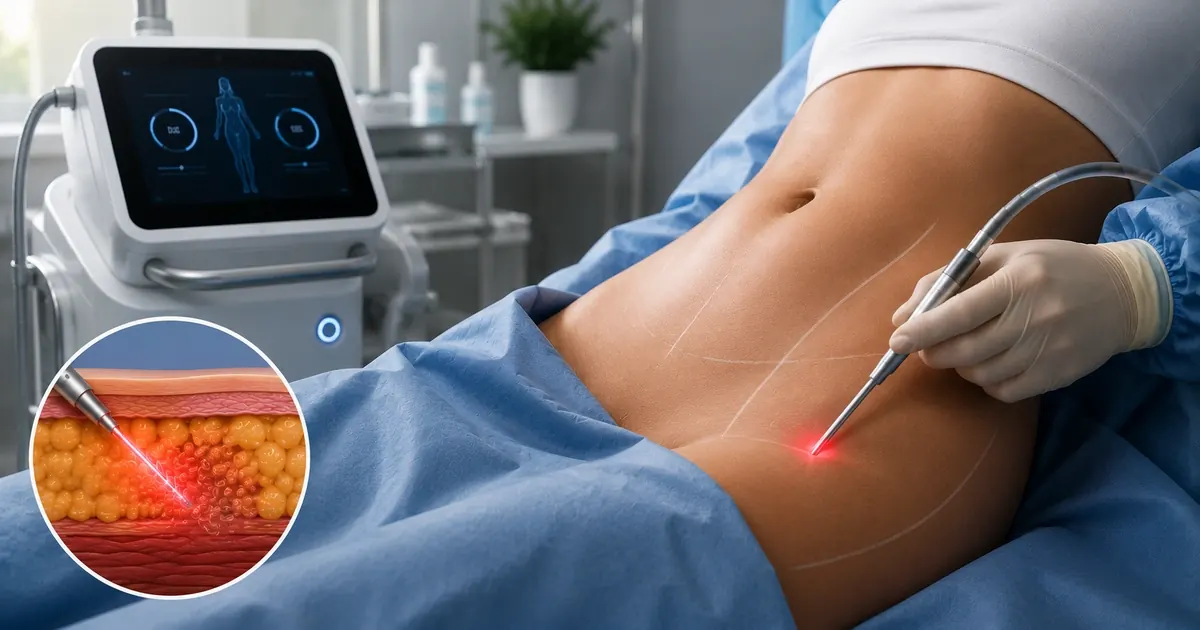
What Is SmartLipo?
SmartLipo is a registered trademark of Cynosure Inc. (now part of Hologic) for a laser-assisted lipolysis (LAL) device system. The name is often used by clinics as a marketing synonym for laser liposuction broadly, but strictly speaking it refers only to Cynosure's specific product line — which has gone through several generations since its US FDA clearance in 2006.
Understanding this branding is clinically important: SmartLipo is one of several competing laser lipo devices (others include SlimLipo, CoolLipo, LipoLite, and ProLipo PLUS) that produce broadly comparable outcomes. A clinic advertising "SmartLipo" is telling you the brand of laser they own, not necessarily that they will achieve a better result than a skilled surgeon using a different laser system. Surgeon experience and technique remain the dominant outcome variables.
Brand vs Generic Laser Lipo
The wider category is laser-assisted lipolysis (LAL) — also called laser liposuction or laser lipo. All LAL devices work on the same fundamental principle: a thin optical fibre is inserted subcutaneously through a tiny incision, and laser energy is delivered to fat tissue, causing thermal disruption of fat cell membranes (lipolysis). The emulsified fat is then removed by suction, or in some cases drains through the incision by gravity.
SmartLipo's clinical characteristics are therefore representative of LAL as a category. When reviewing published clinical evidence, studies of SmartLipo, SlimLipo, or any other LAL device are broadly applicable to the mechanism. Where SmartLipo-specific device data exists, it is noted below.
The Wavelengths — 1064 nm, 1320 nm, 1440 nm
Laser wavelength determines which chromophore (target tissue molecule) absorbs the energy most effectively. SmartLipo uses Nd:YAG (neodymium-doped yttrium aluminium garnet) laser technology across its platforms:
| Wavelength | Primary chromophore (target) | Effect | Available in |
|---|---|---|---|
| 1064 nm | Oxyhaemoglobin / lipid | Fat cell rupture; haemostasis; moderate thermal spread | Original SmartLipo; MPX; TriPlex |
| 1320 nm | Water in tissue | Greater dermal heating; collagen stimulation; enhanced skin tightening | SmartLipo MPX; TriPlex |
| 1440 nm | Water (highest absorption) | Most efficient lipolysis per joule; superficial dermal remodelling | SmartLipo TriPlex |
Laboratory work comparing 1064 nm and 1320 nm tissue effects found that the 1320 nm wavelength produced more pronounced dermal collagen changes in histological specimens — the theoretical basis for the MPX and TriPlex skin-tightening claims.1 However, whether this translates to a clinically meaningful difference between device generations in real patients has not been established in randomised controlled trials.
SmartLipo MPX and TriPlex Generations
The SmartLipo product line evolved as follows:
- SmartLipo (original, 2006): Single 1064 nm Nd:YAG wavelength. FDA-cleared for laser-assisted lipolysis. The foundational device for which most early clinical data was generated.
- SmartLipo MPX (2008): Dual-wavelength platform combining 1064 nm and 1320 nm. The "MPX" refers to multiplexed delivery — both wavelengths delivered through a single fibre. Added ThermaGuide temperature feedback to monitor dermal heating in real time, reducing thermal burn risk.
- SmartLipo TriPlex (2011): Triple-wavelength addition of 1440 nm to the MPX platform. The 1440 nm wavelength has the highest water absorption of the three and was introduced primarily to improve lipolytic efficiency and superficial tissue remodelling. SmartSense motion sensor technology was added to detect unsafe energy delivery speed.
Most current SmartLipo procedures use the MPX or TriPlex platform. When a clinic advertises "SmartLipo," they will typically be using one of these multi-wavelength systems rather than the original single-wavelength device.
How SmartLipo Works Step by Step
SmartLipo follows the same procedural framework as all laser-assisted lipolysis procedures. The steps below describe a standard single-area treatment under local anaesthesia or IV sedation — the most common setup for a chin or arm procedure.
Step 1: Tumescent Infiltration
Before the laser fibre is inserted, the surgeon infiltrates the target fat compartment with tumescent fluid — a dilute solution of saline, local anaesthetic (lidocaine), and a vasoconstrictor (adrenaline/epinephrine). Tumescent infiltration serves three purposes:
- Anaesthesia: The lidocaine numbs the treatment area, allowing the procedure to be performed under local anaesthesia or light sedation rather than general anaesthesia in many cases.
- Vasoconstriction: Adrenaline contracts blood vessels, significantly reducing intraoperative bleeding and bruising.
- Tissue turgor: The fluid swells the fat compartment, creating a safer working space for the laser fibre and cannula, and increasing the distance between the laser and the overlying dermis — reducing burn risk.
The tumescent technique is not unique to SmartLipo — it is standard across all modern liposuction including traditional suction-assisted lipo. Its introduction in the 1980s is what made office-based liposuction under local anaesthesia feasible and safe.4
Step 2: Laser Fibre Insertion
Once the tumescent fluid has taken effect (typically 15–30 minutes), the surgeon makes one or more small access incisions — typically 2–3 mm, barely larger than a pinhole. A thin cannula is inserted, through which the optical laser fibre (typically 300–600 microns in diameter) is threaded into the subcutaneous fat layer.
The fibre is moved in deliberate fanning passes through the fat. In MPX and TriPlex systems, the ThermaGuide temperature sensor embedded near the tip measures tissue temperature in real time. The surgeon monitors this readout and adjusts their technique to maintain the target therapeutic temperature range (typically 38–42°C at the dermis) without exceeding the threshold that would cause a burn (above approximately 47°C sustained).
Step 3: Lipolysis and Collagen Stimulation
As the laser fibre passes through fat tissue, two parallel processes occur:
Fat cell disruption (lipolysis): The laser energy is absorbed by chromophores in the fat cells — at 1064 nm primarily by oxyhaemoglobin and lipid content; at 1320/1440 nm by water in the tissue. This absorption generates heat, which ruptures fat cell membranes. The contents — triglycerides and cellular debris — are released into the interstitium as an emulsified fluid. The 1440 nm wavelength, with its very high water absorption, performs this emulsification efficiently and requires fewer passes than the original 1064 nm system.2
Collagen stimulation: Simultaneously, the thermal energy reaching the underside of the dermis heats dermal collagen fibres. At the right temperature range, this causes immediate collagen contraction (an acute shortening effect) and initiates a wound-healing response in which fibroblasts are stimulated to produce new collagen over the following months. This is the mechanism behind the skin-tightening effect — and it is the primary clinical rationale for choosing laser lipo over traditional suction-only techniques.
Step 4: Suction and Closure
After the laser passes are complete, the liquefied fat is removed using a conventional suction cannula connected to a vacuum aspirator. In smaller areas (particularly the chin), some surgeons allow a portion of the emulsified fat to drain passively through the incisions rather than suctioning, as this minimises trauma.
The access incisions are typically so small they do not require sutures — they may be closed with a single stitch, a steri-strip, or left to close naturally. Compression garments are applied immediately. The patient is typically discharged the same day.
Total procedure time varies by area: a chin or arm procedure may take 45–90 minutes; multi-area cases take correspondingly longer.
SmartLipo vs Other Techniques
SmartLipo belongs to the laser-assisted lipolysis (LAL) category. The clinically relevant comparisons are: LAL as a category vs VASER ultrasound-assisted liposuction (UAL), and both vs traditional suction-assisted liposuction (SAL/PAL).
| Feature | SmartLipo / Laser LAL | VASER (UAL) | Traditional (SAL/PAL) |
|---|---|---|---|
| Energy type | Light (laser heat) | Sound (ultrasound cavitation) | None (mechanical only) |
| Fat removal | Comparable to traditional | Comparable to traditional | Baseline reference |
| Skin tightening | Modest — best published evidence | Some — different collagen mechanism | None |
| Tissue selectivity | Moderate — heat affects all tissue | High — spares vessels and nerves | Low — purely mechanical |
| Best suited to | Small areas with mild laxity (chin, arms) | HD sculpting; fibrous fat; gynecomastia | Any area; large-volume procedures |
| Unique risk | Thermal burn (skin or nerve) | Seroma (fluid collection) | Contour irregularity |
| Cost vs traditional | +15–30% | +15–30% | Baseline |
| Large-volume suitability | Not recommended | Good | Excellent |
Within the LAL category specifically, head-to-head data comparing SmartLipo to other laser lipo brands (SlimLipo, CoolLipo, etc.) is limited — no large randomised trials show a meaningful clinical difference between brands. A 2025 systematic review of laser-assisted lipolysis concluded that LAL as a category is a "promising alternative to traditional liposuction" with a favourable complication profile, without establishing superiority of any single brand.2
For a full detailed comparison, see Laser vs VASER vs Traditional Liposuction.

The Skin Tightening Question: Evidence
Skin tightening is the central marketing claim for SmartLipo and laser lipo broadly. It is important to evaluate this claim honestly — because while the effect is real and reproducible, it is also modest, and it is the main reason the 15–30% cost premium exists.
What the Histology Shows
Histological studies of tissue biopsies taken from SmartLipo treatment sites have consistently shown two key findings:1
- Immediate collagen contraction: At therapeutic laser temperatures, existing collagen fibres in the reticular dermis and fibrous septae shorten and contract — contributing to immediate post-procedure firmness.
- New collagen formation: Over 3–6 months post-procedure, fibroblast activity is upregulated, producing new collagen (primarily Type I and Type III) in the treated dermis. This is the mechanism behind the gradual skin-tightening seen over months rather than immediately.
These histological changes have been confirmed in multiple independent laboratory studies, including the landmark Duplechain et al. (2009) evaluation of 1064/1320 nm tissue thermal effects.1 The biology is real and well-characterised — the question is how much this translates clinically.
What the RCT Shows for Chin
The best clinical evidence for SmartLipo skin tightening comes from the submental (chin) area. A controlled study examining laser-assisted lipolysis for the chin found statistically significant skin tightening as measured by objective ultrasound skin-thickness assessment and blinded physician rating, compared to baseline and control.3
The chin area is the most studied for two reasons:
- It is a small, well-defined anatomical zone where skin-tightening measurements are reproducible and clinically meaningful
- The skin of the submental area has a relatively thin dermis, making it more responsive to the thermal collagen stimulus than thicker skin areas
For other body areas (abdomen, arms, thighs), the clinical evidence is less consistent — primarily case series and before-after photography with no objective measurement or control group. This does not mean skin tightening does not occur in these areas, but the effect is harder to measure and the evidence is lower quality.
Magnitude of Effect — Realistic Expectations
Patients considering SmartLipo for skin tightening should set realistic expectations. The key points from the evidence:
- The effect is real but modest. Published data shows measurable skin tightening — but studies do not show dramatic retraction of significantly loose skin. A patient with mild skin laxity (say, slightly crepey inner arms or mild chin skin after fat removal) is an appropriate target for SmartLipo's skin-tightening effect.
- SmartLipo cannot replace a surgical skin excision. For significant skin laxity — for example, loose abdominal skin after major weight loss, or significantly sagging upper arms — no liposuction technique (laser, VASER, or traditional) removes excess skin. A brachioplasty, tummy tuck, or other excisional procedure is required.
- Results continue developing for months. Collagen remodelling takes 3–6 months. Patients who assess their skin at 4–6 weeks post-procedure and are disappointed should understand that the tightening is still developing at that point.
- Younger skin with good elasticity responds better. The skin-tightening effect is most pronounced in patients with good underlying skin quality. Age-related loss of elastin and collagen limits the achievable response in older skin.
Best Areas and Candidates
Ideal Areas for SmartLipo
SmartLipo's skin-tightening advantage is most clinically useful in areas where moderate fat removal is combined with a desire for skin retraction, and where the volume of fat removed does not require large cannulas or general anaesthesia. The best-documented areas are:
- Chin and submental area: The most evidence-supported indication. Chin lipo with SmartLipo is a very common, well-tolerated procedure performed under local anaesthesia. The small volume, thin dermis, and high patient satisfaction in published series make this the strongest use case.
- Inner arms (tricep area): A small-volume area where any degree of skin laxity following fat removal is noticeable and problematic. The laser's collagen effect adds meaningful clinical value here for patients with mild-to-moderate arm skin laxity.
- Bra area and axillary fat: The bra fat and axillary bulge — the rolls visible at the side and back of the bra line — are fibrous areas. SmartLipo performs well here, and the modest tightening assists with skin adherence after fat removal in this mobile area.
- Inner knees: A smaller, less-mobile area with relatively thin, responsive skin. SmartLipo suits small-volume inner knee fat well.
- Moderate-volume abdomen and flanks with mild laxity: For patients who are near-ideal weight with focal abdominal fat and mild skin laxity — rather than large-volume procedures — SmartLipo can be appropriate. Surgeon selection is more critical here as thermal risk increases with volume.
Poor Choices for SmartLipo
SmartLipo is not the best choice for all patients or all areas:
- Large-volume multi-area procedures: As treatment volume increases, so does total thermal energy delivered and anaesthetic requirements. For large-volume procedures (e.g. full abdomen + flanks + back + thighs), traditional liposuction or VASER is more appropriate. The thermal risk from laser lipo at high volumes is not adequately justified by the skin-tightening benefit across such large surface areas.
- Significant skin laxity: Patients with a substantial skin excess — hanging skin after major weight loss, severely deflated skin post-pregnancy — will not achieve meaningful skin contraction from SmartLipo. An excisional procedure (tummy tuck, arm lift) is required.
- Fat removal only, no skin-tightening need: For a patient with good skin quality and a single goal of fat removal, traditional liposuction achieves equivalent fat reduction at 15–30% lower cost with no thermal burn risk. There is no reason to pay a premium for laser technology if skin tightening is not a treatment goal.
- Fibrous fat in large volumes (male flanks, upper back): VASER's tissue selectivity and mechanical advantage in fibrous tissue makes it a better choice than SmartLipo for large fibrous fat deposits.
Candidacy Checklist
A good SmartLipo candidate typically meets most or all of these criteria:
| Criterion | Favourable for SmartLipo | Consider other approach |
|---|---|---|
| Treatment area size | Small to moderate (1–3 areas) | Large-volume multi-area procedure |
| Skin laxity | Mild — skin has elasticity | Significant skin excess requiring excision |
| Goal | Fat removal + skin tightening | Fat removal only (no tightening needed) |
| BMI | 18–30 (localised deposit) | Significant overweight; consider staged weight loss first |
| Age / skin quality | Good elastin reserve; younger patients respond better | Very poor skin elasticity from age or history of smoking |
| Medical history | Generally healthy; non-smoker | Active skin infection; clotting disorder; immunosuppression |
Results Timeline and Recovery
Week-by-Week Recovery Table
| Timepoint | What to Expect | Instructions |
|---|---|---|
| Day 1–3 | Soreness, bruising, swelling; treated area feels firm and warm. Small amounts of tumescent fluid may drain from incisions (normal). | Rest. Wear compression garment continuously. Avoid strenuous activity. |
| Days 4–7 | Bruising peaks and begins to turn yellow-green. Swelling remains significant. Most patients can return to desk work at days 5–7 for a small-area procedure. | Compression garment. Short walks encouraged. No heavy lifting. |
| Weeks 2–3 | Bruising largely resolved. Swelling still present but reduced. Shape change becoming visible. Treated area may feel lumpy — this is normal fibrosis that resolves. | Continue compression. Light walking / low-intensity cardio from week 2. |
| Weeks 4–6 | Significant shape change visible. Most patients comfortable returning to social activities. Lumpy texture softening. Compression garment use often reduced to daytime only. | Massage if recommended by surgeon. Resume most exercise from week 4–6. |
| Months 2–3 | Substantial final result visible. Skin tightening effect begins to develop meaningfully as new collagen is deposited. Area feels increasingly soft and natural. | Full activity resumed. Compression garment typically discontinued. |
| Months 3–6 | Final result. Maximum skin tightening effect achieved as collagen remodelling completes. Fat reduction is permanent — removed cells do not regenerate. | No restrictions. Reassess with surgeon if any concerns. |
When Skin Tightening Develops
One of the most common patient misconceptions is expecting the skin-tightening effect to be immediate. The acute collagen contraction effect is present from the day of surgery, but new collagen synthesis — the dominant contributor to visible skin improvement — is a biological process that unfolds over weeks to months.
The timeline for skin tightening:
- Week 1–4: Skin appears tight primarily because of swelling and the compression garment. The structural collagen changes are happening invisibly at the cellular level.
- Month 2: As swelling subsides, the skin tightening effect begins to become visible. Some patients note their skin feels firmer than expected given the swelling reduction.
- Months 3–6: Maximal collagen deposition and remodelling. Most of the achievable skin retraction has developed by 3–4 months; the final 4–6 month assessment captures the complete result.
Patients who judge their SmartLipo result at 4–6 weeks are assessing it at the point of maximum residual swelling and before the primary collagen-mediated benefit has fully developed. Surgeons should counsel patients clearly about this timeline to prevent premature disappointment.
Final Result Timing
The fat removal component of SmartLipo produces results on the same timeline as any liposuction — essentially permanent once the swelling has fully resolved (3–4 months). Removed fat cells do not grow back. Weight gain post-procedure causes remaining fat cells to expand, which is why maintaining a stable weight is important for lasting results.
There is no consistent published evidence that SmartLipo produces a shorter recovery, less bruising, or less swelling than traditional liposuction for an equivalent volume procedure. Some early marketing claims suggested "minimal downtime" — this applies to the small-area, local-anaesthesia setting (e.g. chin), not to larger procedures.
SmartLipo Cost Breakdown
SmartLipo costs approximately 15–30% more than traditional liposuction for the same treated area. This premium reflects two factors: the capital cost of the laser equipment (SmartLipo TriPlex platforms list at $80,000–$120,000+), which is amortised into procedure fees; and the additional surgeon training and certification required to use the system safely.
US All-In Cost by Area
| Treatment Area | SmartLipo (US all-in) | Traditional Lipo (US all-in) | SmartLipo premium |
|---|---|---|---|
| Chin / submental | $3,500–$6,500 | $2,500–$4,500 | +$800–$1,500 |
| Inner arms (bilateral) | $4,000–$7,000 | $3,000–$5,500 | +$800–$1,500 |
| Bra / back rolls | $3,500–$6,500 | $2,500–$5,000 | +$700–$1,500 |
| Abdomen (upper + lower) | $5,000–$9,500 | $4,000–$7,500 | +$1,000–$2,000 |
| Flanks (love handles) | $4,000–$7,500 | $3,000–$5,500 | +$800–$1,500 |
| Multiple areas (e.g. abdomen + flanks + arms) | $9,000–$16,000 | $7,000–$12,000 | +$1,500–$3,500 |
"All-in" means surgeon fee + facility fee + anaesthesia + post-operative garments. Prices vary significantly by geographic market, surgeon reputation, and facility type (office-based surgical suite vs ambulatory surgery centre vs hospital). All figures reflect the US market in 2026.
vs Traditional Lipo Cost Premium
The SmartLipo premium is justifiable when the skin-tightening effect is clinically meaningful for the patient — i.e. there is mild skin laxity present that would benefit from collagen stimulation, and the area is small enough that the laser technique is appropriate. For these cases, the extra $800–$1,500 per area is reasonable for the additional benefit.
The premium is not justifiable when:
- The patient's skin quality is excellent with no laxity — the skin will retract naturally after fat removal regardless of technique
- The patient has significant skin laxity that requires an excisional procedure — SmartLipo will not meaningfully address this
- The procedure is large-volume — traditional lipo or VASER is more appropriate and the laser premium is not warranted
A critical consumer point: the "SmartLipo" brand name does not guarantee a better outcome. A skilled surgeon using SlimLipo, CoolLipo, or another LAL device will produce comparable results. Conversely, an inexperienced surgeon using a SmartLipo TriPlex will not produce results equivalent to an experienced surgeon using a simpler device. When comparing quotes, verify the surgeon's specific experience with laser-assisted lipolysis — how many procedures per year, what their complication rate is, and whether they can show you before-and-after photographs of patients with anatomy similar to yours.
Turkey SmartLipo Packages
Turkey has become a popular destination for medical tourists seeking body contouring at significantly reduced cost. Istanbul and Antalya host numerous JCI-accredited or internationally recognised clinics offering SmartLipo and laser lipo procedures as part of all-inclusive packages.
| Package Type | Turkey all-inclusive (USD) | Includes |
|---|---|---|
| SmartLipo — single small area (chin / arms) | $1,200–$2,500 | Surgery, hospital stay, garments, basic transfers |
| SmartLipo — 2–3 areas (abdomen + flanks) | $2,500–$4,500 | Surgery, 1–2 nights accommodation, garments, airport transfers |
| SmartLipo — multi-area package (3–5 areas) | $3,500–$6,000 | Surgery, 2–3 nights hotel, garments, all transfers, follow-up |
Turkey pricing represents roughly 60–75% savings on equivalent US procedures. When evaluating Turkish clinics, verify: board certification of the operating surgeon (Turkish Board of Plastic Surgery or equivalent), facility accreditation, what is genuinely included in the package fee, and how post-operative complications would be managed if you return home. See Liposuction in Turkey — full guide for a detailed framework.
Frequently Asked Questions
-
For the right candidate — a smaller area with mild skin laxity where modest skin tightening adds clinical value — yes. The laser's collagen-stimulating effect is a real but modest benefit that traditional liposuction does not provide. For patients seeking large-volume fat removal with no skin-tightening goal, or patients with significant skin excess requiring excision, the 15–30% cost premium is not justified. The key question is: does skin tightening from the laser add meaningful value for my specific anatomy and goals?
-
15–30% more than traditional liposuction for the same area. In the US: chin or inner arms run $3,500–$7,000 all-in; abdomen $5,000–$9,500; multiple areas $9,000–$16,000. In Turkey, all-inclusive packages for 2–3 areas are typically $2,500–$4,500 USD. The SmartLipo brand name does not guarantee better results than other laser lipo systems — surgeon experience is the dominant variable.
-
Neither is universally better. SmartLipo adds a modest but real skin-tightening effect via laser collagen stimulation — a genuine advantage for mild laxity in smaller areas. For pure fat removal, traditional liposuction achieves equivalent reduction at lower cost and without thermal burn risk. The choice depends on your individual anatomy and goals: if skin tightening from the laser will add meaningful value for you, SmartLipo's premium may be worthwhile. If not, traditional lipo is the more cost-effective option.
-
No. SmartLipo is a surgical procedure. It requires incisions, anaesthesia (local, IV sedation, or general depending on volume and patient preference), a laser fibre and suction cannula inserted through the skin, and a period of post-operative recovery with compression garments. The branding implies minimal invasiveness, but it is a full surgical liposuction procedure. Non-surgical fat reduction alternatives — such as CoolSculpting (cryolipolysis) or Kybella (deoxycholic acid injection) — are entirely different in mechanism, capability, and recovery profile.
-
The original SmartLipo used a single 1064 nm Nd:YAG wavelength, which absorbs primarily into lipid and haemoglobin to cause fat cell rupture. SmartLipo MPX added a 1320 nm wavelength targeting water in tissue, which increases dermal heating and collagen stimulation for a greater skin-tightening effect. SmartLipo TriPlex added a 1440 nm wavelength with the highest water absorption, optimising lipolytic efficiency and superficial tissue remodelling. Most current procedures use the MPX or TriPlex platform.
-
Recovery is broadly the same as traditional liposuction. For a small area (chin, arms): most patients take 5–10 days off work and wear a compression garment for 4–6 weeks. Visible shape change is clear by weeks 4–6. The skin-tightening effect continues developing for 2–3 months after surgery, with final results at 3–6 months. There is no consistent evidence that SmartLipo produces shorter swelling or faster recovery than traditional lipo for equivalent procedures — the "minimal downtime" claim applies specifically to small-volume procedures under local anaesthesia, not to larger multi-area cases.