
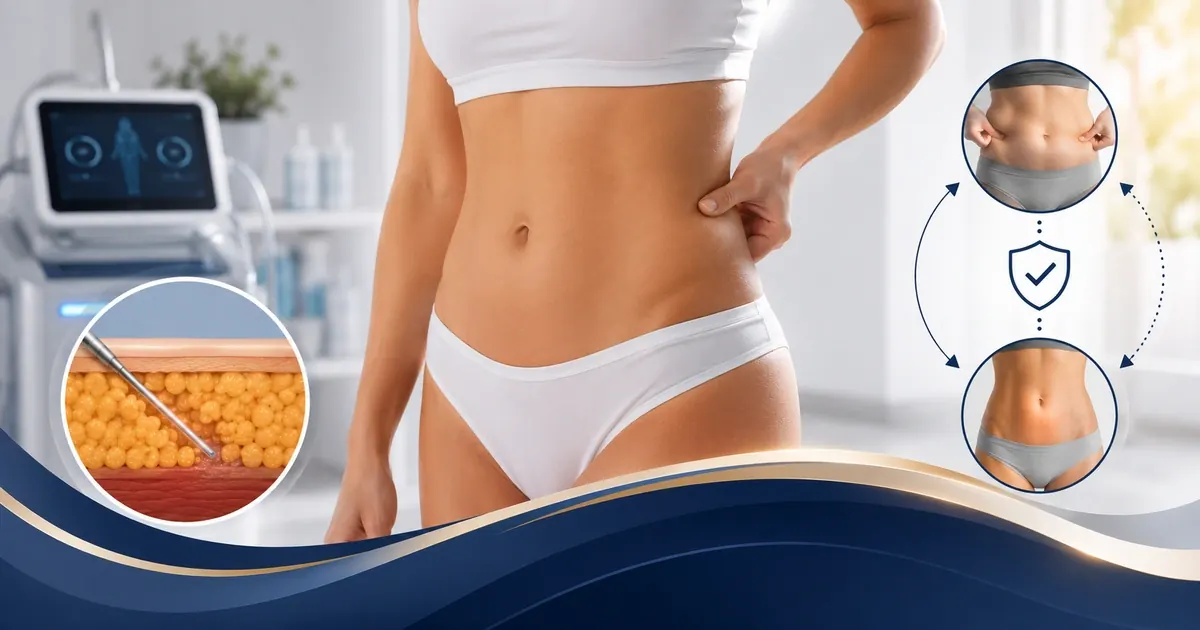
Removed Fat Cells Do Not Regenerate
One of the most common questions patients ask before liposuction is whether the fat will simply come back. The cellular biology gives a clear answer: the fat cells that liposuction removes are gone permanently. Understanding why requires a brief look at how fat cells behave in the adult body.
Adipocyte Biology: Adult Fat Cells Do Not Multiply Significantly After Removal
Fat cells — adipocytes — are among the most long-lived cells in the human body. Research using carbon-14 dating of human adipocytes established that the fat cell number in the body is largely set during childhood and adolescence. After that, the total fat cell count in adults remains remarkably stable over time: when individual cells die, they are replaced at a rate of roughly 10% per year regardless of weight change. Critically, this turnover replaces cells that die — it does not generate additional cells in response to removal.
What changes with weight gain in adults is not cell number but cell size. When you consume more calories than you burn, each fat cell accumulates more lipid (fat) droplets and enlarges — a process called adipocyte hypertrophy. When you lose weight, those same cells shrink. The number stays essentially the same. This biology is central to why liposuction's effects are structural rather than merely cosmetic: when cells are physically extracted, the body does not replace them at the same site in any meaningful way.
What Liposuction Actually Removes
It is important to be precise here: liposuction does not empty fat cells and leave them behind — it removes the entire cell. The surgeon inserts a thin cannula into the subcutaneous fat layer and uses suction to physically extract whole adipocytes, along with connective tissue septa and some fluid. Once an adipocyte is extracted from the body, it is gone. The site where it existed becomes part of the healed surgical zone, ultimately replaced by fibrous tissue as healing completes.
This is fundamentally different from procedures that destroy fat cells in place (such as CoolSculpting, which freezes cells, or laser lipo devices that lyse them) — though those procedures also rely on the body clearing the dead cells over subsequent weeks. With surgical liposuction, the cells are mechanically removed during the procedure itself.
The volume of cells removed varies significantly by procedure. A typical liposuction session removes between 500 ml and 5,000 ml of fat-rich aspirate (the mixture of fat cells, tumescent fluid, and blood). Large-volume liposuction is generally defined as removing more than 5,000 ml of total aspirate in a single session.3
Why Treated Areas Remain Slimmer Relative to Untreated Areas
Because the number of fat cells at the treated site is permanently reduced, the capacity of that area to store fat is permanently lower than it was before surgery. If you gain a modest amount of weight after liposuction — say, 2–4 kg — the treated area will store proportionally less fat than an untreated area with the same number of remaining cells. This is why patients who gain moderate amounts of weight after lipo often notice that other parts of their body change more noticeably than the treated zones. The treated area retains its relative advantage as long as the weight gain is modest. This relative slimness is real, measurable, and a consequence of the permanent reduction in cell count.
Can You Gain Weight After Liposuction?
Liposuction does not alter your metabolism or your body's fundamental ability to store energy as fat. If you consume more calories than you expend after surgery, you will gain weight. The question is where that weight goes — and how it affects the treated areas.
Remaining Fat Cells in Treated Areas Can Still Expand
While liposuction reduces the number of fat cells at the treated site, it does not remove every cell. The surgeon aims to remove a significant proportion of subcutaneous fat in the target zone, but some adipocytes necessarily remain — particularly in the deepest layer of subcutaneous fat, which is deliberately left intact to maintain skin vascularity and reduce the risk of surface irregularities. These remaining cells are metabolically normal: they respond to caloric surplus by enlarging exactly as they would have before surgery.
For a patient who gains weight after liposuction, the treated area will not be entirely exempt from fat accumulation. If you gain 10 kg, some of that weight will be distributed to the cells remaining in the treated area. The degree to which this happens depends on the number of cells remaining after surgery — which varies by technique, procedure size, and individual anatomy — and on the total amount of weight gained.
What Happens with Modest Weight Gain
With modest weight gain (roughly 2–5 kg above post-operative weight), most patients find that their overall contour proportions are preserved. The treated area, having fewer cells, stores less fat than untreated areas. The net effect is that the relative improvement in shape — the contour difference between treated and untreated areas — is maintained to a meaningful degree. Weight is distributed across the body more evenly, and the treated zone remains comparatively slimmer. This is perhaps the most honest way to describe what "permanence" means in practice for the typical post-lipo patient: not that the area is permanently immune to any change, but that it will always be relatively more contoured than if the surgery had never been done.
What Happens with Significant Weight Gain
With significant weight gain — typically described in the literature as 10% or more above post-operative body weight — the picture changes meaningfully. Untreated areas, which retain their full complement of fat cells, accommodate a disproportionately large share of the new fat storage. Meanwhile, the cells remaining in treated areas also enlarge. The combined effect is that the relative advantage of the treated area diminishes over time. Patients who gain substantial weight after liposuction frequently report that their contour improvements have largely disappeared and, in some cases, that fat distribution looks different — and not better — than it did before surgery, particularly if fat has redistributed to areas that were not originally problematic. This is the clinical scenario that makes patient selection and pre-operative counselling about realistic expectations so important.
The Fat Redistribution Research
Beyond the straightforward question of weight gain in treated areas, a body of peer-reviewed research has examined whether liposuction causes a more active redistribution of fat — whereby the body compensates for the loss of subcutaneous fat by increasing deposition in other sites, including deep (visceral) fat stores.
Hernandez et al. 2011: Fat Returns to Non-Treated Areas Within One Year in Some Patients
One of the most-cited studies on this question is Hernandez et al. (2011), published in Obesity (PMID 21471454).1 Researchers followed female patients who underwent abdominal liposuction and tracked fat distribution over 12 months using CT scanning and body composition measurements. The key finding: patients who did not engage in regular exercise after surgery showed return of fat — not to the treated abdominal area, but to the thighs and upper abdomen, areas not targeted by the procedure. Total body fat at one year was similar to pre-operative levels in the non-exercising group. By contrast, patients who exercised regularly after surgery did not show the same compensatory redistribution, and maintained improved body fat distribution at 12 months.
The mechanism proposed by the authors is a homeostatic one: the body has regulatory systems that defend a set fat mass over time. When subcutaneous fat depots are surgically reduced, the body may compensate by increasing fat storage in other accessible sites, particularly if no change in energy balance accompanies the surgical intervention. Exercise appears to blunt this compensation, possibly by modulating the hormonal signals that regulate fat deposition.
Benatti et al.: Visceral Fat May Increase After Large Subcutaneous Removal
A related and more concerning finding comes from Benatti et al. (PMID 22539589),2 which examined metabolic outcomes after liposuction in a controlled trial. The study found that while patients did see reductions in subcutaneous fat, they did not demonstrate corresponding improvements in insulin sensitivity, triglycerides, blood pressure, or other metabolic markers — outcomes that would normally be expected if fat reduction were metabolically beneficial. More significantly, the non-exercising liposuction group showed a measurable increase in visceral adipose tissue (VAT) — the deep abdominal fat that surrounds internal organs — at six months post-surgery, compared with controls who did not have liposuction.
Visceral fat is metabolically more active and more closely associated with cardiovascular risk and insulin resistance than subcutaneous fat. An increase in VAT following surgical removal of subcutaneous fat is therefore a meaningful concern from a health perspective, even if the cosmetic result remains acceptable. Again, the exercise group in this trial did not show the same increase in visceral fat, reinforcing the conclusion that exercise is a critical counterpart to liposuction — not just for cosmetic maintenance but potentially for metabolic health.
Clinical Significance: Most Stable-Weight Patients Do Not Experience Significant Redistribution
It is important to contextualise these findings. Both Hernandez et al. and Benatti et al. studied specific patient populations under specific conditions — particularly non-exercising patients who did not substantially change their lifestyle after surgery. The redistribution effects documented were most pronounced in this sedentary, non-lifestyle-modifying group. For patients who maintain stable weight and engage in regular physical activity after liposuction, clinically significant fat redistribution is generally not considered a major risk. The practical message from these studies is not "liposuction causes fat to move" as an automatic consequence, but rather "liposuction without lifestyle modification may allow the body to compensate for fat loss over time."
| Weight change scenario | Expected change in treated areas | Expected change in untreated areas |
|---|---|---|
| Stable weight + exercise | Contour improvement maintained; remaining cells stay small | No significant change; relative slimness of treated area preserved |
| Stable weight, no exercise | Contour broadly maintained; some research suggests possible mild redistribution over time | May see modest fat accumulation in non-treated areas over 12 months per Hernandez et al. |
| Modest weight gain (2–5 kg) | Some enlargement of remaining cells; contour advantage partially preserved | Larger share of weight stored here; treated area remains relatively slimmer |
| Significant weight gain (>10% body weight) | Remaining cells enlarge substantially; contour improvement diminished | Disproportionate fat storage; overall shape may be altered relative to pre-operative baseline |
| Large-volume lipo, no lifestyle change | Initial reduction; slower recurrence than untreated areas | Possible visceral fat increase (Benatti et al.); redistribution to non-treated subcutaneous sites |

How to Maintain Liposuction Results
The research literature and clinical experience converge on a consistent set of recommendations for preserving liposuction results long-term. None of them are complicated, but all require sustained commitment.
Weight Stability: The Single Most Important Factor
No other factor influences long-term liposuction outcomes more than weight stability. Because the permanence of results depends on the remaining fat cells staying small, anything that causes those cells to enlarge — specifically, a sustained caloric surplus — will erode the contour improvements over time. This does not mean you must maintain your exact post-operative weight forever with no variation; normal day-to-day fluctuations of 1–2 kg are meaningless. What matters is avoiding a sustained upward trend of more than 4–5 kg from your post-operative weight. Most surgeons frame this as: if you notice your weight climbing, address it early rather than allowing a large gain to accumulate over months or years.
Weight gain is the most common reason for dissatisfaction with liposuction results at long-term follow-up. Equally, it is the most preventable reason. Pre-operatively, the most predictive question a patient can honestly ask themselves is: "Am I committed to maintaining roughly this body weight going forward?" If the answer is uncertain, it may be worth addressing lifestyle and eating habits before undergoing surgery.
Dietary Approach Post-Lipo: Maintaining, Not Dieting
Post-operatively, the goal is not to lose more weight — it is to eat at maintenance. Severely restricting calories after liposuction can impair healing, reduce muscle mass, and lead to the kind of weight cycling that makes long-term results unpredictable. Most patients benefit from a whole-food-focused approach that provides adequate protein (supporting muscle maintenance), moderate carbohydrates, and healthy fats — essentially the same dietary pattern associated with long-term weight maintenance in the general population. Protein is particularly important in the months following surgery, as it supports tissue healing and lean mass retention.
One practical consideration: patients sometimes notice they feel fuller more easily in the months after liposuction. This is a transient effect related to post-surgical physiology and should not be used as a reference point for habitual portion sizes. As appetite returns to normal — typically within 3–6 months — returning to maintenance-level eating requires the same attention to portion awareness and food quality as it did before surgery.
Exercise: Building Muscle Improves Appearance in Treated Areas
Exercise serves two distinct roles in maintaining liposuction results. First, it helps maintain energy balance — by increasing caloric expenditure, regular activity provides more dietary flexibility while still keeping weight stable. Second, and often overlooked: resistance exercise builds lean muscle in the treated areas, and muscle has a very different visual effect on contour than fat. A patient who adds muscle to the abdomen, flanks, or thighs after liposuction will have a firmer, more toned appearance that extends and enhances the surgical result in ways that surgery alone cannot achieve.
As noted in the Hernandez et al. study, exercise also appears to blunt the homeostatic fat redistribution that can occur after liposuction in sedentary patients. Beginning light exercise (walking, gentle movement) within days of surgery and progressing to structured cardiovascular and resistance training from weeks 4–6 onwards is the standard recommendation. The key is establishing exercise as a long-term habit, not just a temporary post-surgical behaviour.
What "Maintenance" Realistically Means Day-to-Day
In practical terms, maintaining liposuction results long-term is not dramatically different from the approach to maintaining any healthy body weight. It involves eating nutritious foods in appropriate quantities, moving regularly, monitoring weight trends without obsessing over daily fluctuations, and taking early action if weight begins to climb. For most patients who were already near their healthy weight range before surgery, this is not a radical departure from their existing lifestyle — liposuction addresses areas that were resistant to those efforts, not a substitute for them.
| Behaviour | Effect on long-term results | Priority |
|---|---|---|
| Stable body weight (within ~4 kg of post-op weight) | Directly preserves contour improvement long-term | Essential |
| Regular resistance exercise | Builds muscle in treated areas; blunts fat redistribution | High |
| Regular aerobic/cardiovascular activity | Supports weight maintenance; improves overall body composition | High |
| Adequate dietary protein | Preserves lean mass, supports healing and ongoing tissue quality | Moderate–High |
| Significant weight gain (>5–10 kg) | Erodes results; risks fat redistribution to non-treated areas | Avoid |
| Yo-yo dieting / weight cycling | Unpredictable effect on contour; may preferentially refill untreated areas | Avoid |
How Long Do Liposuction Results Last?
The longevity of liposuction results is not a fixed number — it is a function of what the patient does after surgery. With that caveat clearly stated, the evidence and clinical experience offer some useful benchmarks.
With Stable Weight: Decade-Scale or Lifelong in Most Patients
For patients who maintain a stable body weight and engage in regular physical activity, the contour improvements from liposuction are generally described as permanent in the clinical literature. Long-term follow-up studies — including those conducted at five and ten years post-procedure — consistently show that patients who maintained their weight reported persistent satisfaction with their results and measurable differences in treated-area fat volume compared with matched controls who did not have surgery.4 Since removed fat cells do not regenerate, the structural basis for the improvement remains intact. The result is not immune to the effects of ageing on the body generally, but the relative contour advantage is preserved.
In practical terms, patients who had liposuction of the abdomen, flanks, or thighs in their 30s and maintained their weight typically report that those areas remain comparatively slimmer into their 40s, 50s, and beyond — even as overall body composition changes somewhat with age. This matches the cellular reality: the treated areas have fewer cells to accumulate fat regardless of how many years pass.
With Significant Weight Gain: Results Diminish Over Time
Patients who gain significant weight — commonly cited as 10% or more above their post-operative body weight — will typically see their liposuction results diminish meaningfully. The remaining fat cells in treated areas enlarge, and untreated areas may accumulate disproportionate fat. At some threshold of weight gain, patients may feel that the results have been lost entirely. This is not a complication of the surgery; it is a predictable consequence of expanding fat cells in areas where fewer of them remain after treatment. The surgery did not fail — but it was not designed to counteract significant sustained weight gain.
Whether results can be "restored" in this scenario depends on the degree of weight gain and the underlying anatomy. Returning to the original post-operative weight will reduce the fat cell volume, but may not fully restore the pre-weight-gain contour if the enlargement of remaining cells has been severe or prolonged. In some cases, a touch-up procedure may be considered — but this is best discussed with a surgeon on an individual basis after achieving weight stability.
Ageing Effects on Skin Over the Longer Term
Independent of fat cell behaviour, the appearance of liposuction results is also affected by the normal ageing changes that occur in skin and soft tissue over time. As patients age, skin elasticity decreases (due to reduced collagen and elastin production), subcutaneous tissue loses volume and support, and gravitational changes affect tissue distribution. These processes can affect how the contour looks over a decade or more, independent of whether the treated fat cells stay small.
For younger patients with good skin quality at the time of surgery, this is rarely a concern in the medium term. For older patients, or those with pre-existing skin laxity, the quality of the skin over a treated area becomes an important factor in how well results are maintained. In some cases, liposuction results in slightly looser skin in treated areas as the supportive fat volume is reduced — a trade-off that is best discussed with the surgeon during pre-operative planning, and one that can be relevant to decisions about combining liposuction with skin-tightening procedures at the time of surgery or later.
Realistic Long-Term Expectations
Patient satisfaction with liposuction is high in the short-term — surveys consistently find high approval ratings at 6–12 months post-procedure. Long-term satisfaction is more nuanced and is closely tied to how well expectations were set before surgery.
Patient Satisfaction in Long-Term Follow-Up Studies
Studies examining patient satisfaction at five or more years after liposuction generally find that the majority of patients who maintained stable weight report continued satisfaction with their results. In a systematic review context, the most significant predictor of long-term dissatisfaction is weight gain after surgery — not complications, not technique-related outcomes, but simply the accumulation of body weight over time. This finding has important implications: it means that the outcome of liposuction is substantially within the patient's control in the long run. Patients who understand and accept this responsibility before surgery tend to report higher long-term satisfaction than those who viewed liposuction as a permanent solution requiring no ongoing effort.
Lipo Is a Starting Point, Not the Endpoint of the Journey
One of the more useful framings used by experienced plastic surgeons in pre-operative consultations is that liposuction is a "body contouring procedure," not a weight loss procedure or a permanent fat solution. The procedure addresses a specific contour problem — disproportionate subcutaneous fat in one or more areas that is resistant to diet and exercise — by permanently reducing the cell count in those areas. It gives the patient a structural advantage: a lower capacity for fat storage in the treated zone. What the patient does with that advantage determines how long they enjoy it.
The most satisfied long-term patients tend to be those who used surgery as a catalyst to adopt or recommit to healthier lifestyle habits — not as a reward for existing habits, but as a starting point for a better relationship with their body and health. In this framing, the surgery provides the contour result, and the patient's post-operative behaviour determines whether that result is still visible 5 or 10 years later.
Complementary Lifestyle Changes That Preserve Results
Beyond the basics of weight stability and exercise, several complementary habits are associated with better long-term cosmetic and health outcomes after liposuction:
- Hydration: Adequate daily water intake supports skin elasticity and overall tissue health.
- Sleep: Chronic sleep deprivation is associated with increased appetite and impaired weight regulation — both directly relevant to maintaining post-lipo results.
- Stress management: Elevated cortisol from chronic stress promotes visceral fat deposition, which is particularly relevant given the research on visceral fat increase after large subcutaneous removal.
- Avoiding rapid weight cycling: Even cycles that return to baseline weight may affect how fat is distributed over time in patients who have had liposuction.
- Sun protection: UV exposure accelerates skin ageing and degrades elasticity in treated skin surfaces over the longer term.
| Patient behaviour profile | Likely 5-year outcome | Likely 10-year outcome |
|---|---|---|
| Stable weight, regular exercise, healthy diet | High satisfaction; contour improvement preserved or enhanced by muscle gain | Results largely maintained; minor age-related changes in skin laxity expected |
| Stable weight, sedentary lifestyle | Moderate satisfaction; contour maintained but possible redistribution to other areas over time | Results broadly maintained; may see more pronounced age-related tissue changes |
| Modest weight gain (3–5 kg) | Partial preservation of result; treated areas still relatively slimmer | Diminishing advantage; may seek revision or re-commit to weight management |
| Significant weight gain (>10% body weight) | Substantially diminished result; fat redistribution to untreated areas possible | Result largely lost; potential contour change relative to pre-operative baseline |
Liposuction and Future Pregnancy
Pregnancy represents a special case of significant body weight and composition change that many patients considering liposuction need to think through carefully.
Pregnancy After Lipo: Weight Gain Changes the Result
During pregnancy, the body undergoes dramatic changes in fat distribution, fluid retention, skin stretching, and hormonal milieu — all of which affect the appearance of areas previously treated with liposuction. The weight gain associated with a healthy pregnancy (typically 11–16 kg for a normal-BMI patient carrying a single baby) is well above the threshold at which remaining fat cells in treated areas and all cells in untreated areas will expand meaningfully. Patients who had abdominal or flank liposuction and then become pregnant will typically find that their abdomen changes substantially during pregnancy, and that post-partum recovery of the pre-pregnancy and pre-surgery contour takes time — and may require the same combination of weight management and exercise as any post-partum recovery.
There is no evidence that having had liposuction causes complications during pregnancy, affects the health of the pregnancy, or impairs post-partum recovery. The concern is purely cosmetic: pregnancy significantly disrupts the contour result, and the degree to which it recovers afterward depends on the same factors (weight return, exercise, skin elasticity) that govern results in non-pregnant patients. For most patients, the contour gradually returns over 6–18 months after delivery as weight normalises — though the skin may not return to exactly its pre-pregnancy state, particularly after multiple pregnancies.
Timing Lipo Relative to Family Planning
The standard recommendation from plastic surgeons is that women who are planning a pregnancy in the near future should either delay liposuction until after completing their family, or accept that the results will be significantly altered by pregnancy and will require time and effort to restore. This is particularly relevant for abdominal and flank procedures, which are most directly affected by pregnancy-related changes.
There is no definitive rule about how long a patient must wait after liposuction before becoming pregnant — the common guidance is to allow at least 3–6 months for full surgical recovery before conceiving. From a cosmetic perspective, the question is more about timing surgery when you have completed your family planning or are at a stable life stage. Some patients choose to have liposuction after completing their family precisely because they want results that will not be disrupted by future pregnancies.
Patients who have liposuction and later become pregnant should not be alarmed — the pregnancy will not cause any harm related to the prior procedure. The cosmetic outcome after delivery simply requires the same attention to post-partum recovery and weight management as it would for any patient, with the added awareness that the body is returning to a state that was already optimised by surgery rather than to a purely natural baseline.
Frequently Asked Questions
-
The fat cells removed during liposuction are permanently gone — adult adipocytes do not regenerate after extraction, making the structural reduction in cell count a lasting change. In that biological sense, liposuction is permanent. However, the remaining fat cells in treated areas and all cells in untreated areas can still enlarge if you gain weight. So while the cell removal is permanent, the visible result depends on maintaining a stable body weight going forward. For patients who do maintain their weight, results are typically decade-scale or lifelong.
-
Removed fat cells do not come back. However, the remaining cells in treated areas can enlarge with weight gain, which can reduce the contour improvement. Research also shows that some patients who gain weight after liposuction see fat redistribute to non-treated areas — meaning the body may compensate for the reduced storage capacity in treated zones by storing more fat elsewhere.1 This redistribution effect is most pronounced in patients who do not exercise and do not maintain their weight post-operatively. Patients who keep a stable weight and exercise regularly are much less likely to experience significant redistribution.
-
Yes. Liposuction reduces the number of fat cells in treated areas, but it does not remove all of them. If you consume more calories than you burn, the remaining cells in treated areas will enlarge — just as they would in any other part of the body. With modest weight gain, treated areas tend to stay relatively slimmer than before surgery because fewer cells are available to store fat. With significant weight gain, this advantage diminishes substantially.
-
Research suggests this can happen, particularly in patients who gain weight and do not exercise after surgery. Hernandez et al. (2011, PMID 21471454) followed patients for 12 months after abdominal liposuction and found that non-exercising patients showed fat return in non-treated areas (thighs, upper abdomen) rather than the treated zone, with total body fat returning to near pre-operative levels by one year.1 Benatti et al. (PMID 22539589) found evidence of increased visceral fat after large subcutaneous removal in patients who did not modify their lifestyle.2 Patients who exercised regularly did not show these compensation effects. For stable-weight patients who exercise, clinically significant fat redistribution is generally not a major concern.
-
The single most important step is maintaining a stable body weight — ideally within 4–5 kg of your post-operative weight. Beyond that, regular resistance exercise builds lean muscle in treated areas and improves the appearance of results over time; aerobic exercise supports weight maintenance and has been shown to blunt post-liposuction fat redistribution. Eating at maintenance calories (not chronically dieting, not chronically over-consuming), prioritising dietary protein for lean mass support, and avoiding large weight cycles are the practical habits that protect long-term results.
-
With stable body weight, liposuction results are effectively permanent in the treated areas — lasting a decade or more, and in many cases for life. Long-term follow-up studies confirm that patients who maintained their weight continued to show measurable differences in treated-area fat volume compared with controls who never had surgery, many years post-operatively.4 With significant weight gain, results diminish proportionally. Ageing-related changes in skin laxity can affect appearance independently of fat cells over the longer term but do not negate the structural fat cell reduction.